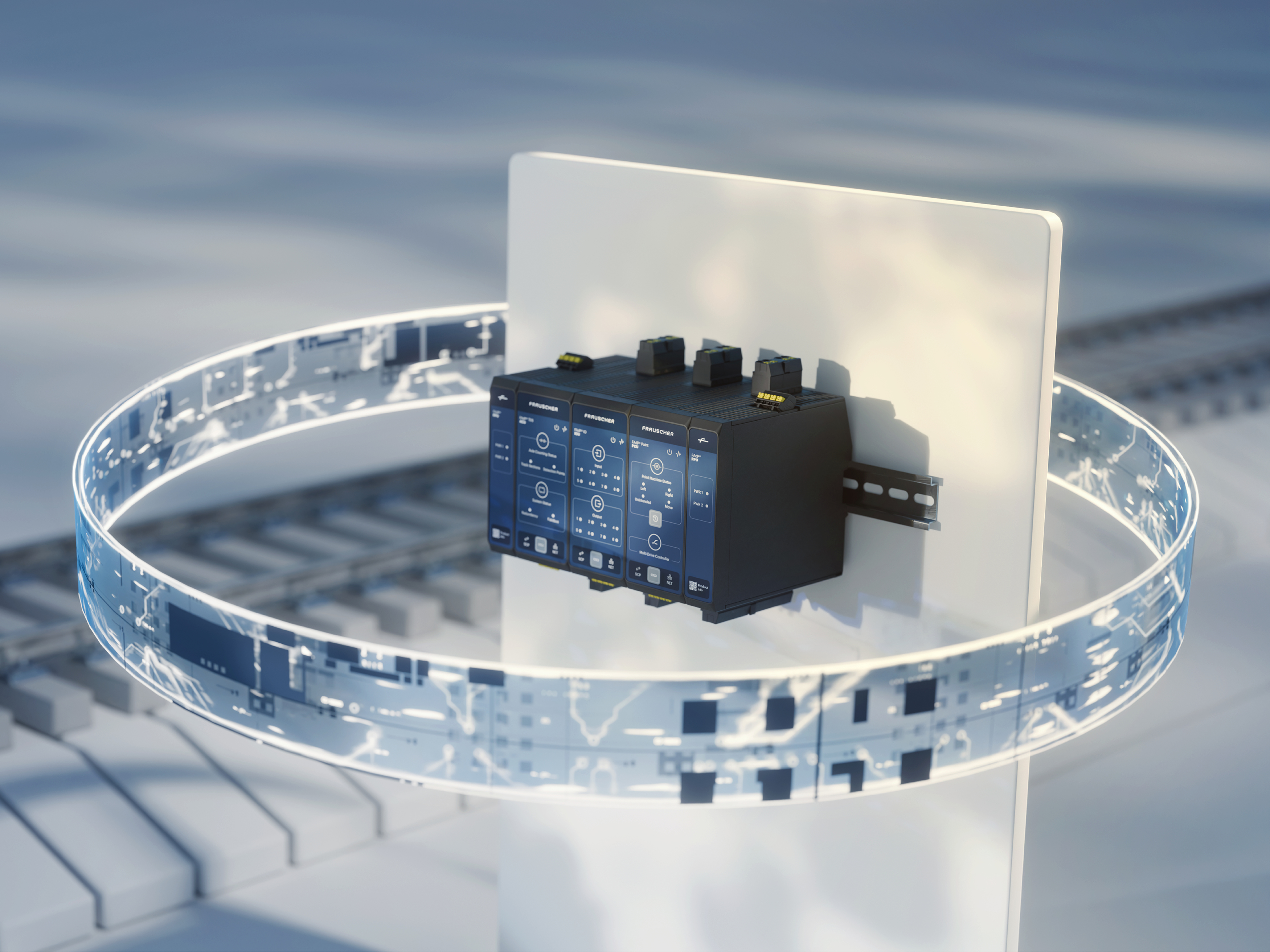
Frauscher Advanced Platform FAdP (click to download)
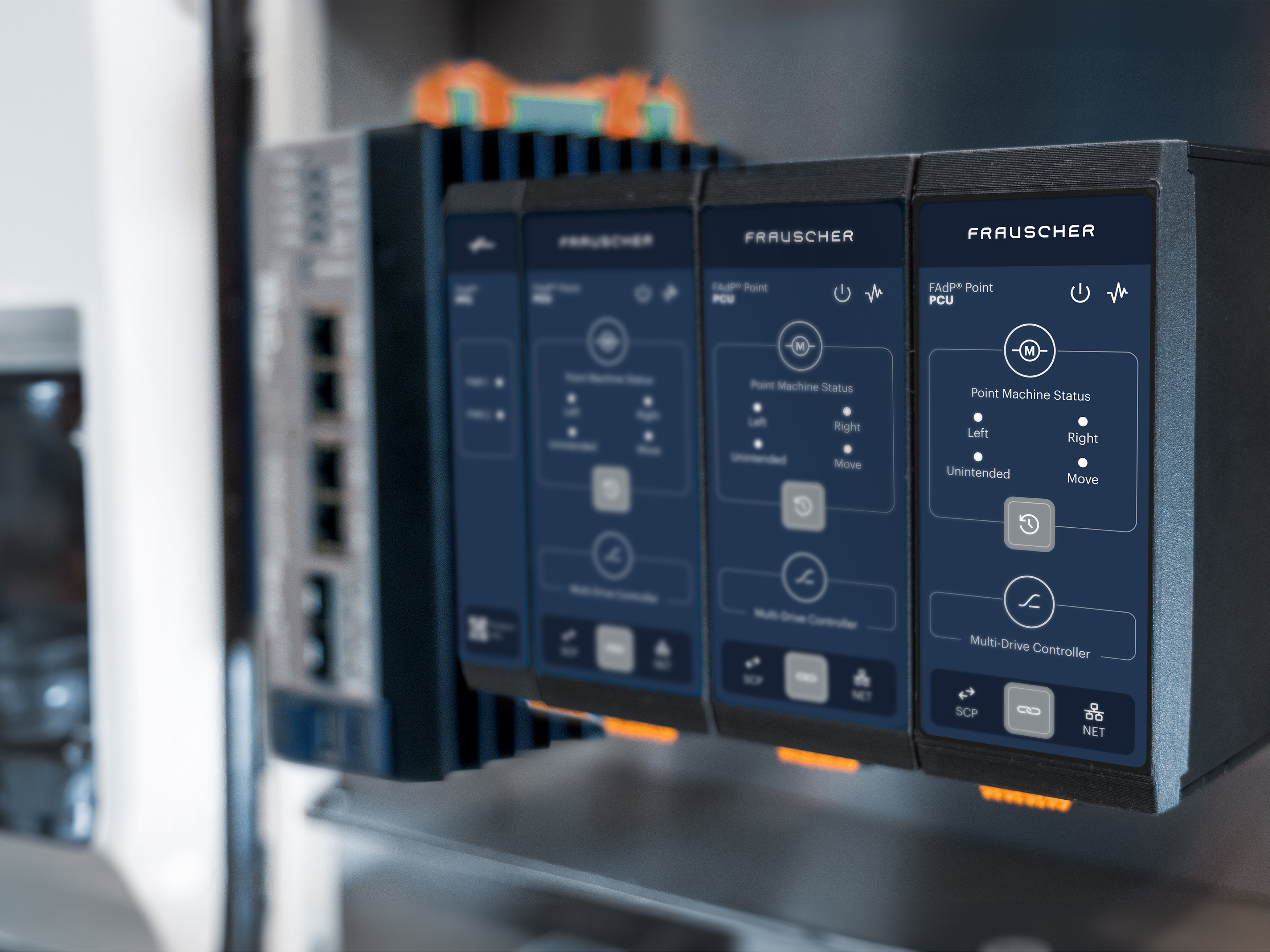
FAdP Point (click to download)
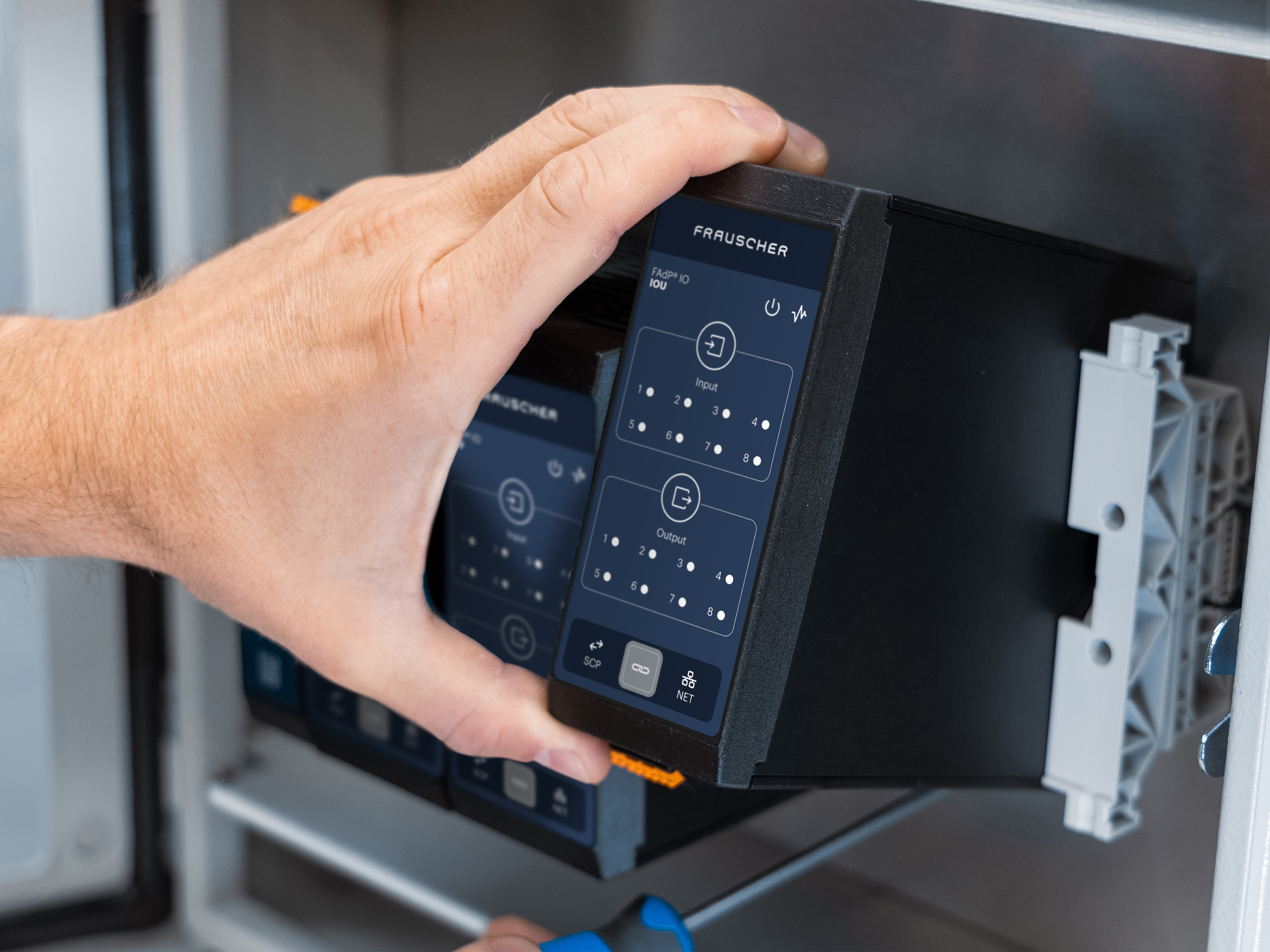
FAdP IO (click to download)
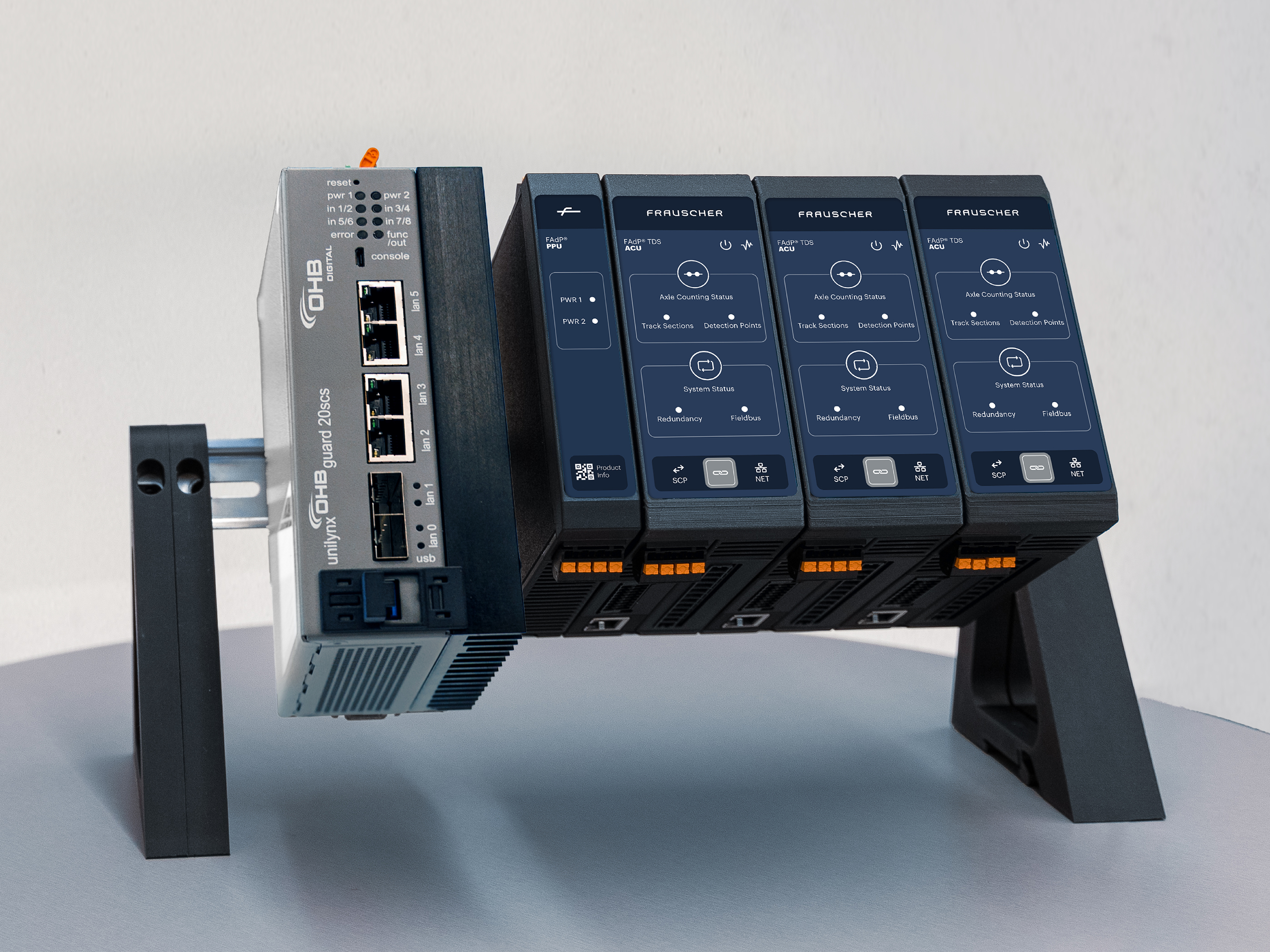
FAdP TDS (click to download)

Notification Center
29 Sep 2026
What Frauscher showed at InnoTrans 2026 – and what was really discussed at the stand
One platform for multiple object controllers, a new wheel sensor generation and a concept that frees train detection from signalling cable: the highlights from the Frauscher stand in Hall 27, Booth 270 – including the topics that drew a full house at the Live Tech Talks.
Anyone who paused in Hall 27 usually stayed longer than planned – because the topics up for discussion at Booth 270 cannot be settled in two sentences. Above all, the question of where the intelligence in a rail network should sit in future: in the control room or in the field. For four days, that question was debated at the exhibits, in the Live Tech Talks and well into the evening.
For Frauscher, this was the first InnoTrans following its integration into the Wabtec Corporation – and the first at which the platform strategy took centre stage as a fully developed offering.
“There is no second opportunity in two years to meet this many customers in one place,” says Christian Pucher, CMO at Frauscher Sensor Technology. “What I value most about InnoTrans is the feedback. In direct conversation at the stand, aspects come up that rarely reach us so openly by other routes – and that is worth more than any market research we could run ourselves.”
Digital signalling infrastructure is moving towards a centralised, digital interlocking architecture: interlocking logic is centralised, while the intelligence needed in the field is distributed to decentralised object controllers, connected over IP-based networks.
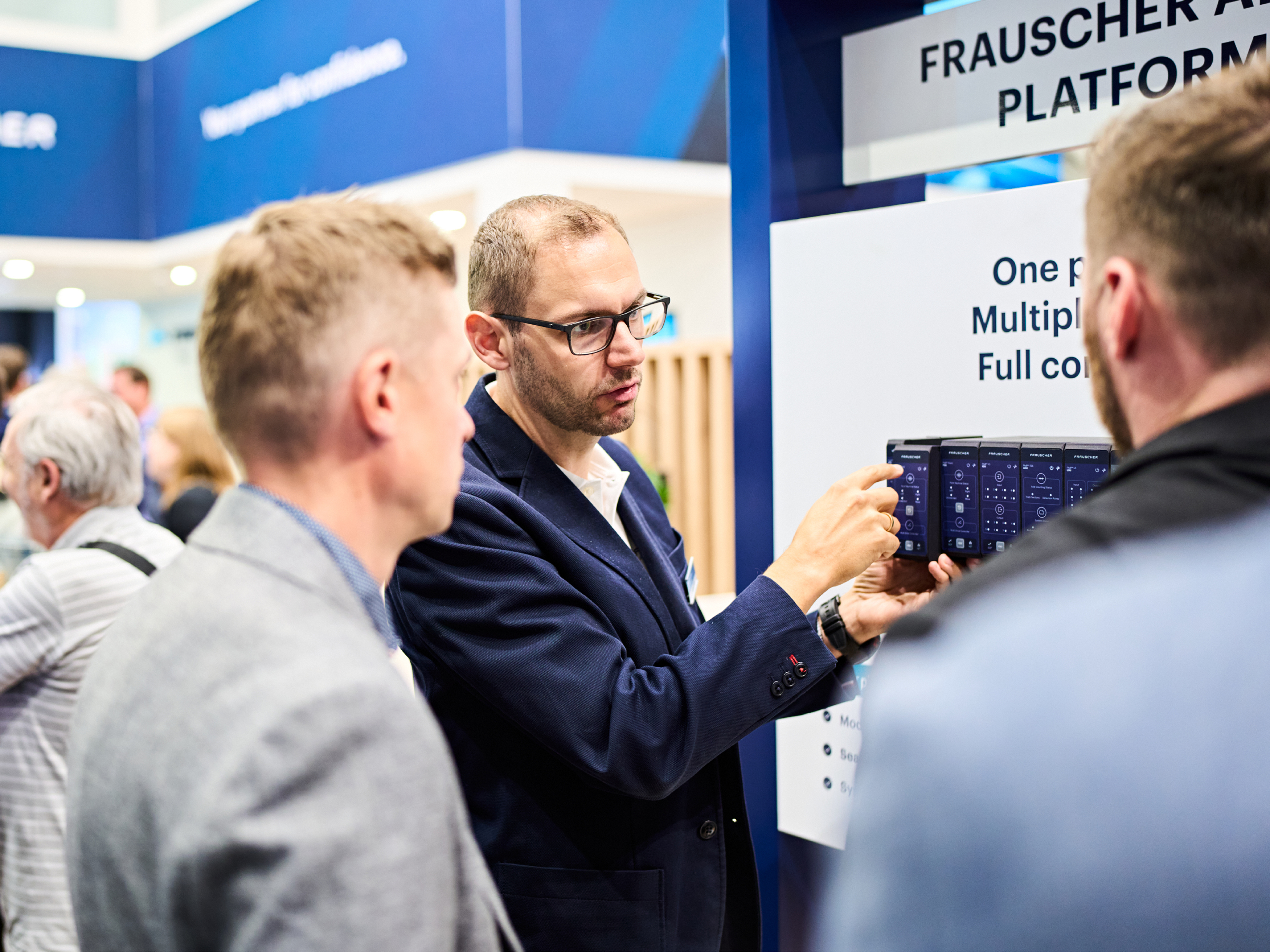
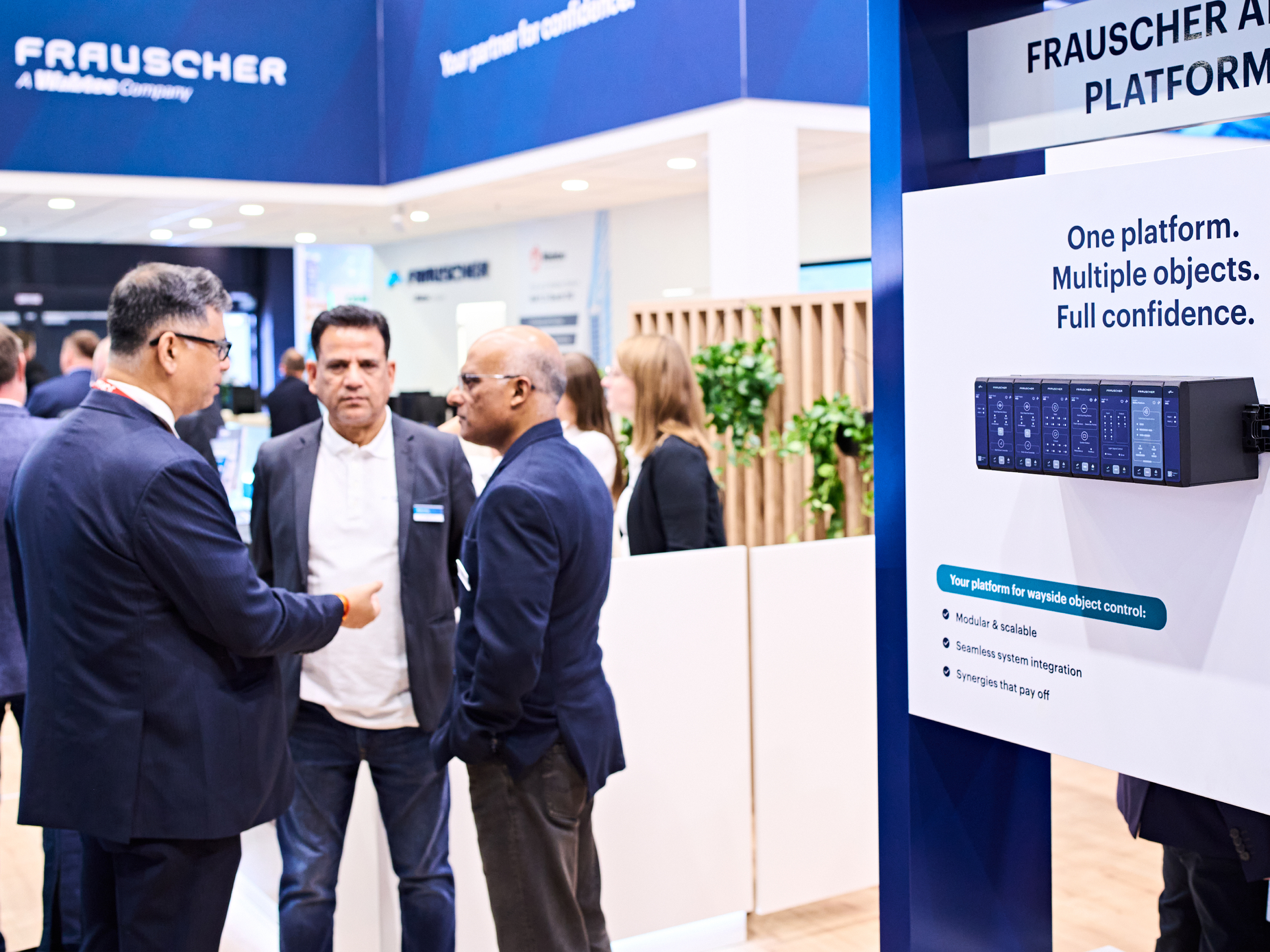
The Frauscher Advanced Platform FAdP was built for exactly this – a single, modular and scalable hardware and software foundation for multiple wayside object controller types. It combines SIL 4 application units with a shared connectivity and power infrastructure, so Point, Train Detection and I/O object controllers can be deployed, managed and upgraded from one common base. This reduces lifecycle costs, cabinet footprint and integration complexity across the entire network.
“When we set out to build FAdP, we made one fundamental decision: a single platform, shared across all object controller types,” explains Florian Einböck, Head of Portfolio Strategy at Frauscher Sensor Technology. “That is not just a cost argument, it is a design philosophy. That consistency is what gives you real confidence across the entire network lifecycle.”
The foundation was not invented from scratch – it has grown. FAdP is the fourth generation of object controller hardware and software, evolved from the Frauscher Advanced Counter FAdC® – the axle counter that still plays a central role in the company’s portfolio. Frauscher has been represented in railway signalling standardisation bodies since 2002 and has been a EULYNX Early Adopter since 2019. The platform supports EULYNX Baseline 4.2 interfaces as well as generic SMI and SSI, RaSTA and OPC-UA; interlocking vendor and customer-specific protocols are available where required.
FAdP Point is the part of the platform that has already made the step from concept to proven reality. A single Point Control Unit PCU supports 4-, 7-, 9- and 11-wire configurations across various power supplies and controls up to 20 point machines through one communication interface – single- and multi-motor turnouts alike, from any manufacturer or generation. Point condition monitoring is fully embedded in the PCU, with no additional hardware required: motor current, voltage, power, phase measurement, switch-over time, turn counter and end-position status.
The field evidence comes from Finland. In the Digirail project, the central interlocking and the object controllers were tendered separately for the first time in Europe – and the choice fell on FAdP Point and Frauscher’s FAdC®-based train detection object controller. Together with system integrator Mipro Oy, they were tested at FTIA’s Kouvola centre against a Siemens DS3 interlocking, including encrypted SSI communication and several Siemens point machine types – with reliable results from first activation.
FAdP IO is a SIL 4 object controller for versatile wayside applications. It enables the safe transmission of input and output data – whether for data transmission, generic I/O applications or the digitalisation of analogue legacy systems. A single Input Output Unit IOU handles 8 safe inputs, 8 safe outputs and 4 additional non-safe outputs; up to 20 IOUs can be combined into one system monitoring up to 160 inputs and outputs through a single RaSTA connection. This makes FAdP IO the answer to precisely those brownfield situations where modernisation has to happen step by step.
FAdP TDS drew the most intensive technical conversations at the stand – often with visitors picturing the track layout of their own network. On display was Frauscher’s forward-looking concept for a fully digital approach to train detection, deliberately put up for discussion with the market in Berlin.
The approach: axle counting without dedicated signalling cable infrastructure. Every wheel sensor is connected via existing or new Ethernet infrastructure; from the access point to the sensor, a single two-wire connection combining power and communication is sufficient. Chaining multiple sensors is currently under testing, and a digital long-distance interface extending up to 6 km over the same two-wire connection is under research.
For operators, the benefit works on three levels. First, a substantial share of total cost of ownership disappears – cable procurement, installation effort and long-term maintenance are reduced significantly or avoided entirely. Second, availability increases, because dedicated signalling cable infrastructure is removed: one of the most frequent root causes of service disruption, as cables age, break and oxidise. Third, FAdP TDS brings the advantages of the new wheel sensor generation into digitally connected, vital axle counting – reliable recognition of partial traversing events and strong immunity against the electromagnetic interference of increasingly complex rolling stock and braking systems.
At platform level, FAdP TDS shares power, connectivity and security modules with FAdP Point and FAdP IO, reducing cabinet footprint, energy consumption and integration complexity. SIL 4 is the target safety level as the concept is developed towards a product.
Frauscher Advanced Platform FAdP (click to download)
FAdP Point (click to download)
FAdP IO (click to download)
FAdP TDS (click to download)
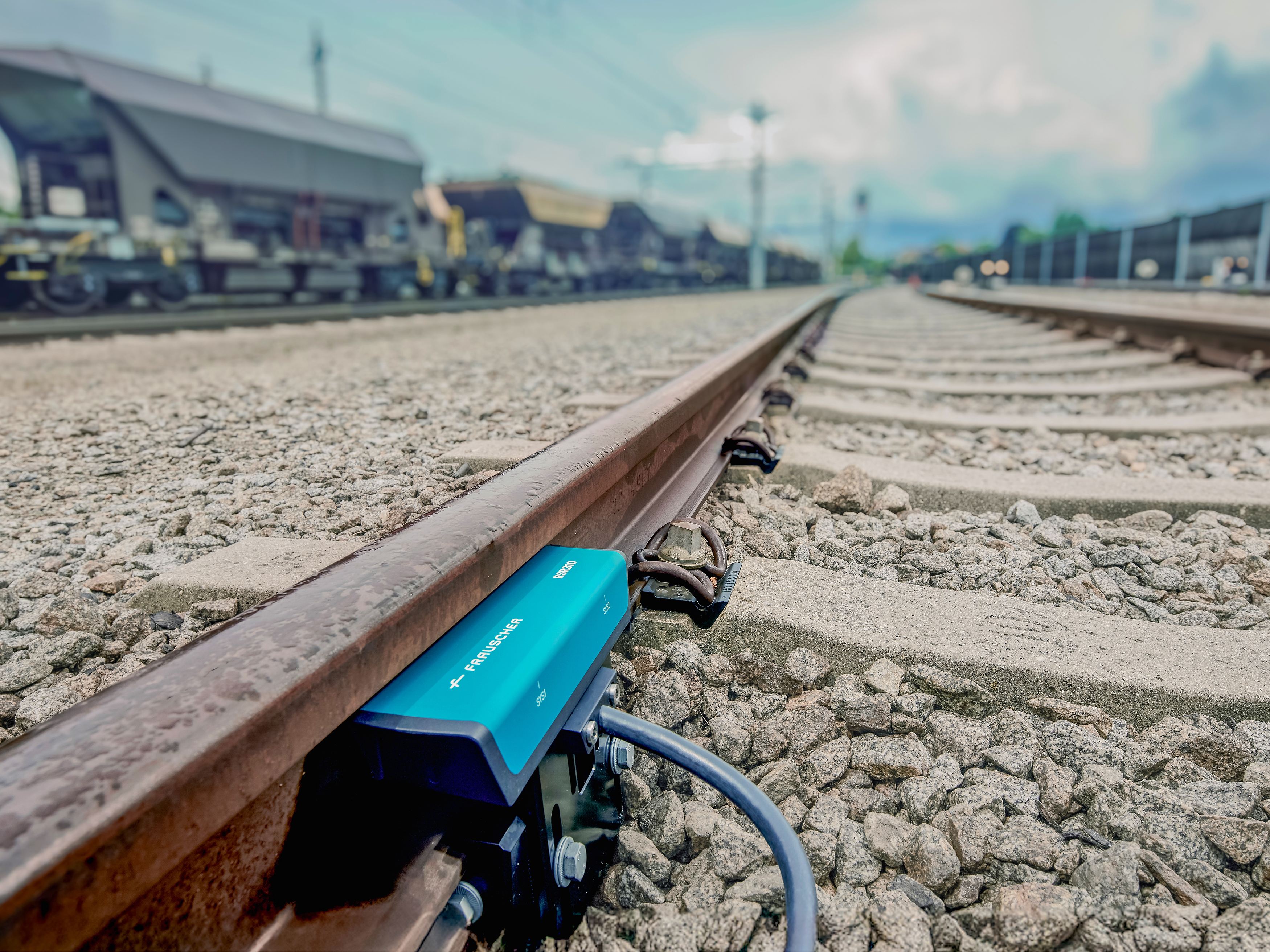
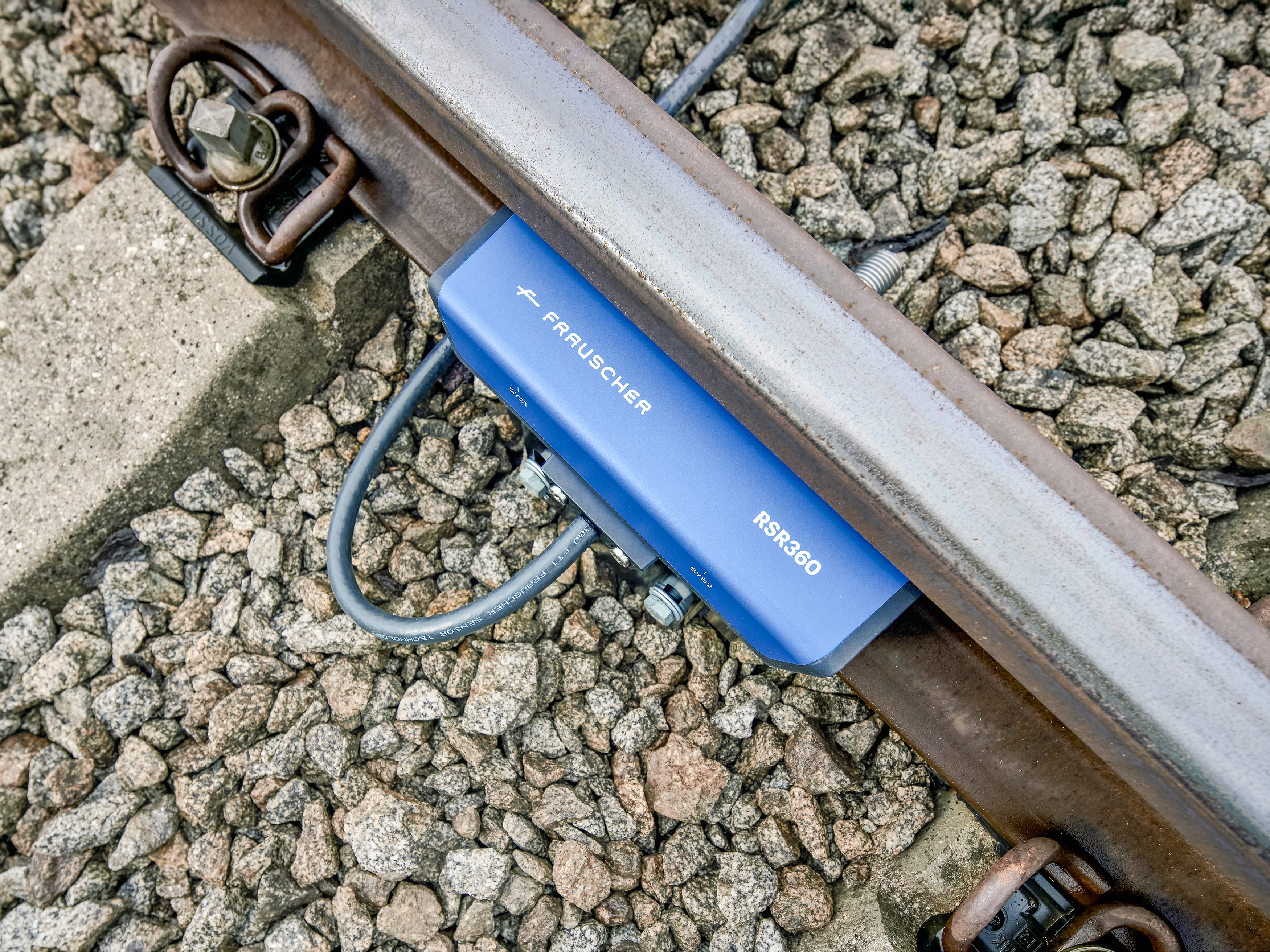
The second major line of the show was at the track. The RSR3xx generation carries forward Frauscher’s experience in inductive wheel detection and advances it in signal processing, mechanical design and built-in diagnostics. An advanced sensor design combined with on-board signal evaluation improves the signal-to-noise ratio by a factor of five, enabling precise, interference-free wheel detection – including reliable recognition of partial traversing events, one of the most frequent sources of nuisance detections in the field.
Added to this are a redesigned rail claw and a flange-free plug-in connection, a reinforced, UV-resistant and rodent-protected cable that needs no additional protective sleeve, and one-time commissioning and calibration indoors. From there, on-board self-test and enhanced diagnostics keep the sensor running maintenance-free. The generation is the result of a six-year, cross-functional research programme with extensive lab testing and three years of field trials with operators.
“This is a genuine change in wheel detection,” says Manfred Sommergruber, Global Product Manager at Frauscher Sensor Technology. “In practice, that factor of five means reliable detection under conditions that would have been challenging before.”
Three models were on display, each designed for a specific system environment:
Basic Integrity (SIL 0), available, the sensor for the Frauscher Track Vacancy System FTVS. FTVS is the axle counting solution for non-vital rail operations that require a Basic Integrity Solution: cost-effective, space-saving and fast to install, suitable as a standalone system, as an overlay or as a targeted spot fix. The electronics are DIN rail-mounted and the sensors mount via rail claw – no drilling, no rail bonds. Typical sites include yards, ports, industrial facilities and mining sites.
SIL 4, in development, designed for FAdC®. The Frauscher Advanced Counter FAdC is in operation in more than 100 countries, throughout all climatic and operational conditions, and offers Supervisor Track Section STS and Counting Head Control CHC – two SIL 4 availability functions that require no additional hardware. RSR360 brings the advances of the new generation into this proven system environment.
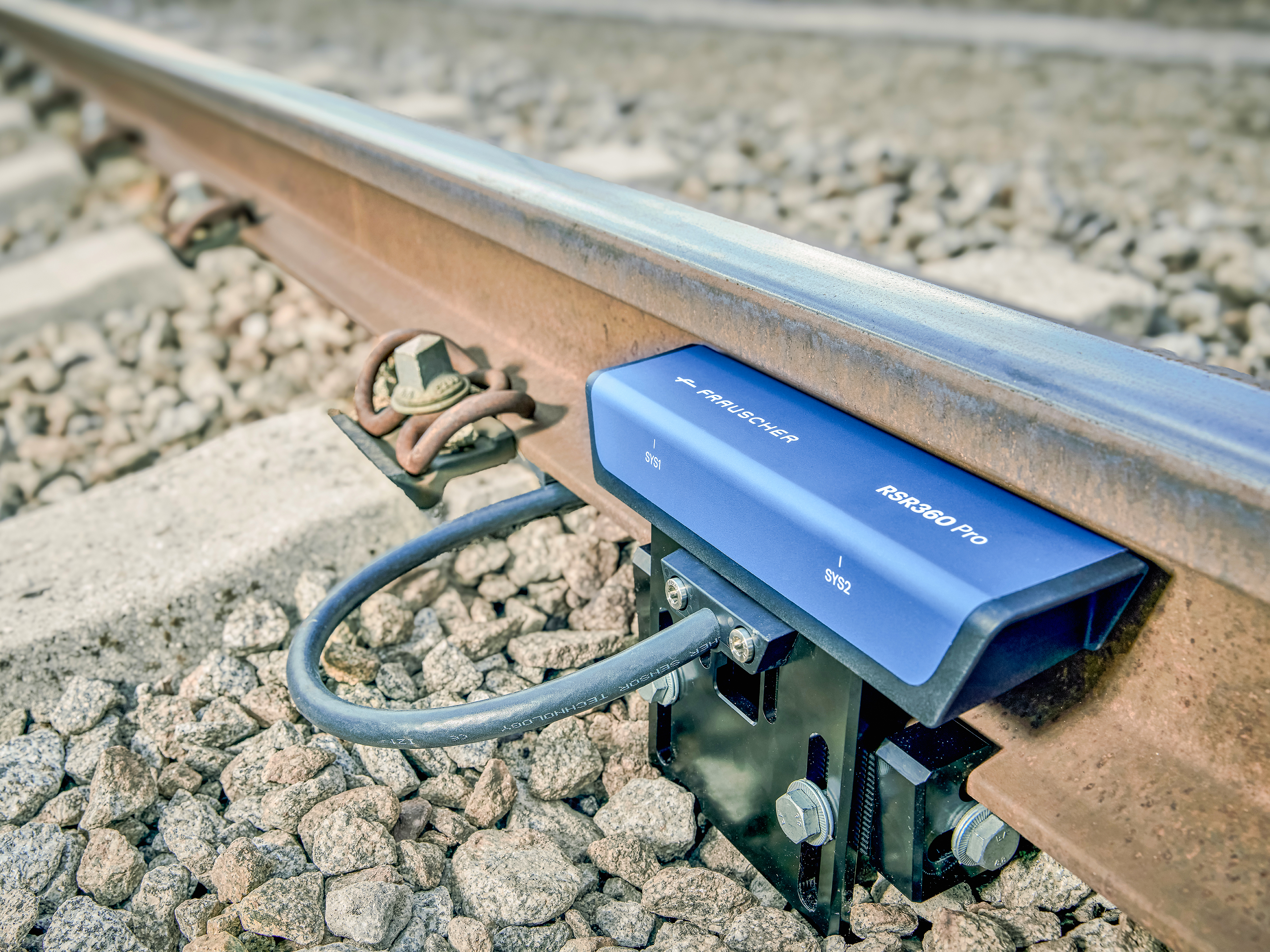
SIL 4 as the target safety level, conceptual direction, shown as a prototype within the FAdP TDS setup. Additional sensors for acceleration and temperature provide condition data beyond basic detection status.
“With FAdP TDS and the RSR360 Pro prototype, we are taking the next step: axle counting without dedicated signalling cable, using existing digital networks instead,” says Sommergruber. “This is something we are actively developing – and at InnoTrans we could show, concretely and for the first time, what that direction looks like.”
RSR310 (click to download)
RSR360 (click to download)
RSR360 Pro (click to download)
At InnoTrans, Frauscher Insights Diagnostics was the complementary layer to the platform story. As the successor to the Frauscher Diagnostic System FDS, the solution is deployment-agnostic by design: locally via the Local Diagnostic Device LDD or centrally via Central Diagnostic Services CDS. Three licence tiers – Basic, Advanced and Expert – are unlocked through Feature Flagging, so operators pay only for the capability they currently need. Basic and Advanced are available via either deployment, depending on site connectivity; the step up to Expert, with one central network overview, early-warning notifications and API integration into higher-level systems, currently requires Central Diagnostic Services.
Today, Frauscher Insights Diagnostics already serves as the diagnostics layer for FAdC® and FAdT, with dashboard, track plan visualisation and pre-fault monitoring – diagnostics logic validated in live rail network deployments, not a first-generation platform. As the portfolio grows, it is built to extend across further field elements, up to the richer diagnostic and sensor data of the RSR3xx generation.
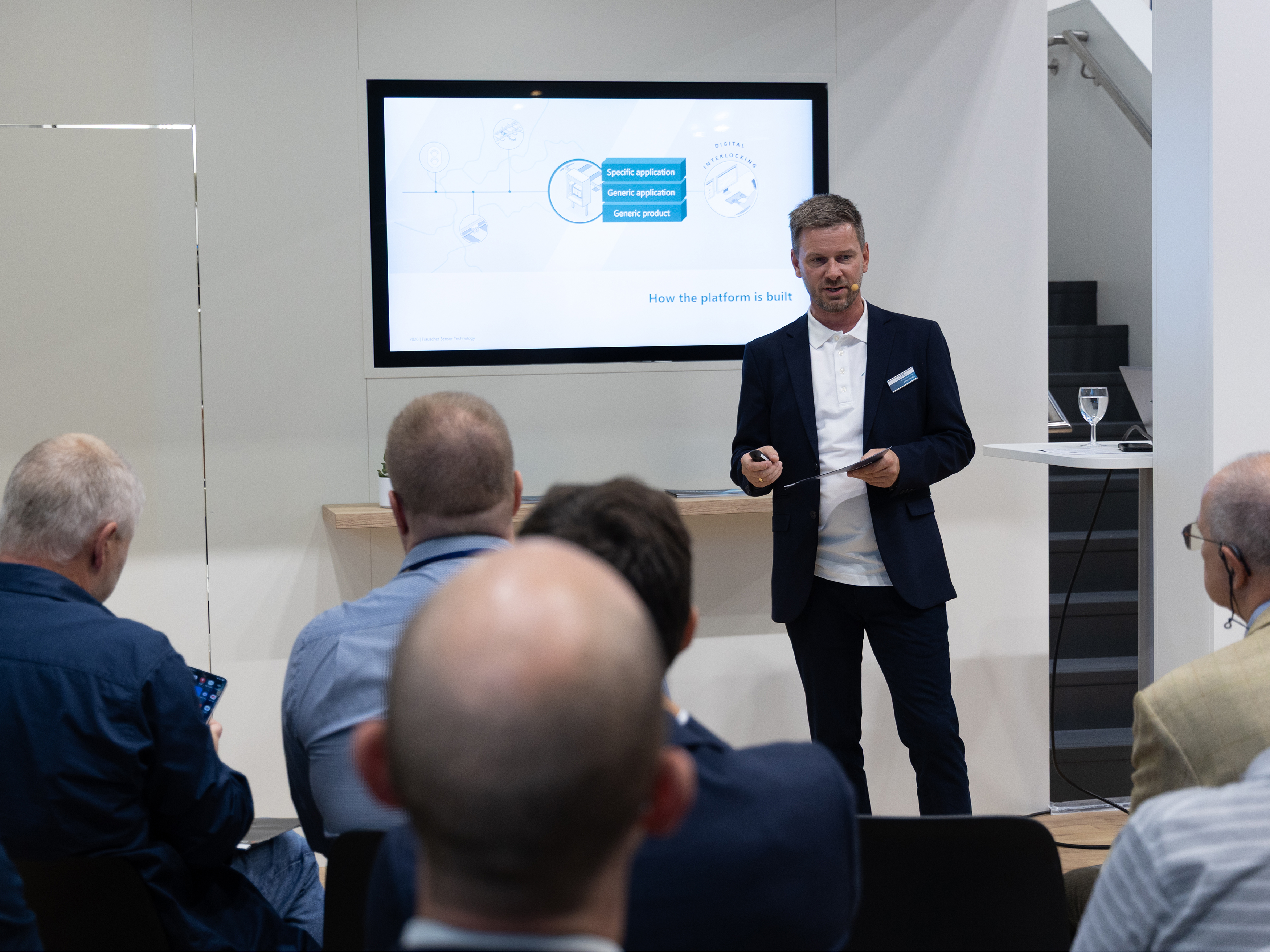
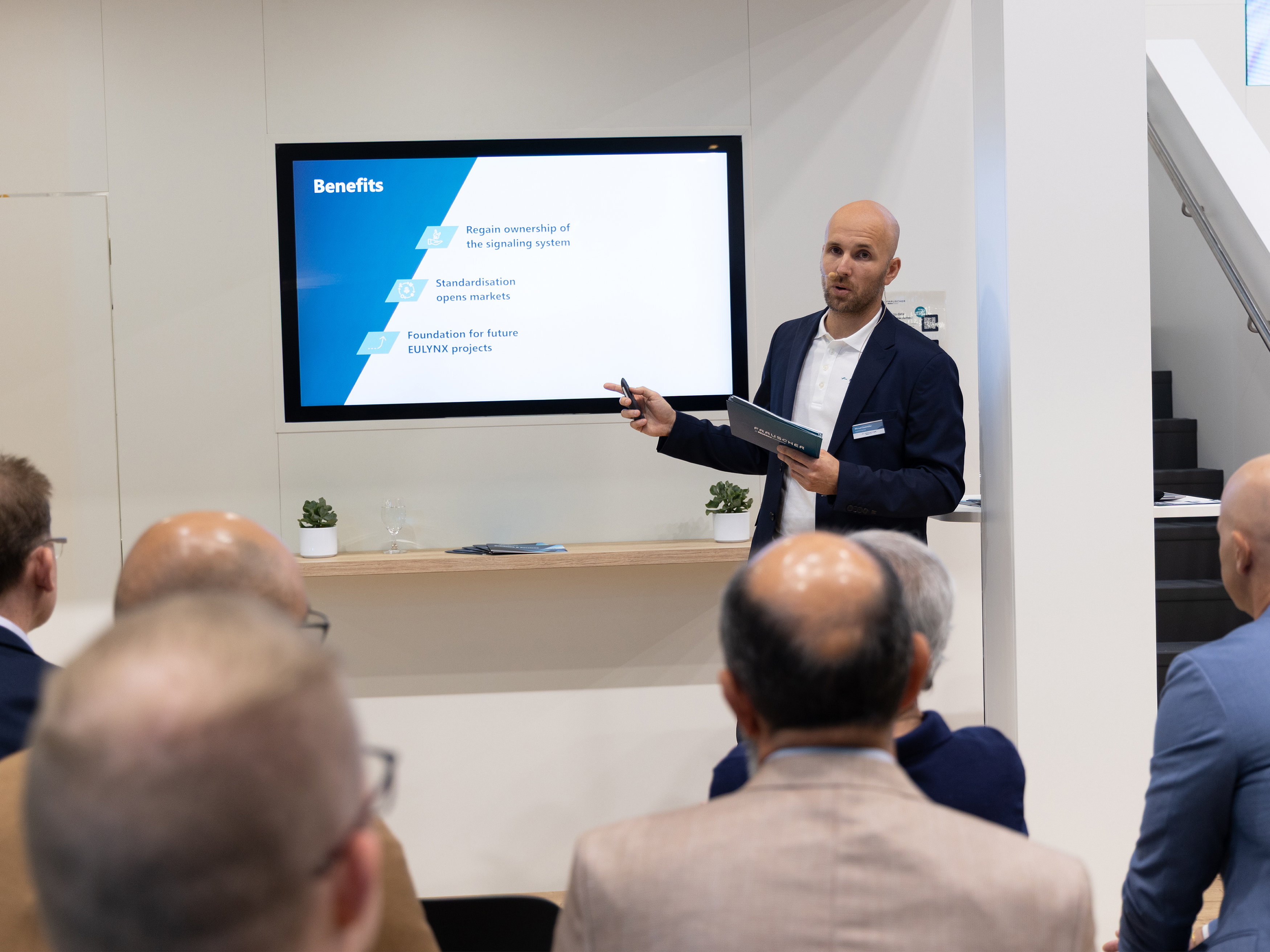
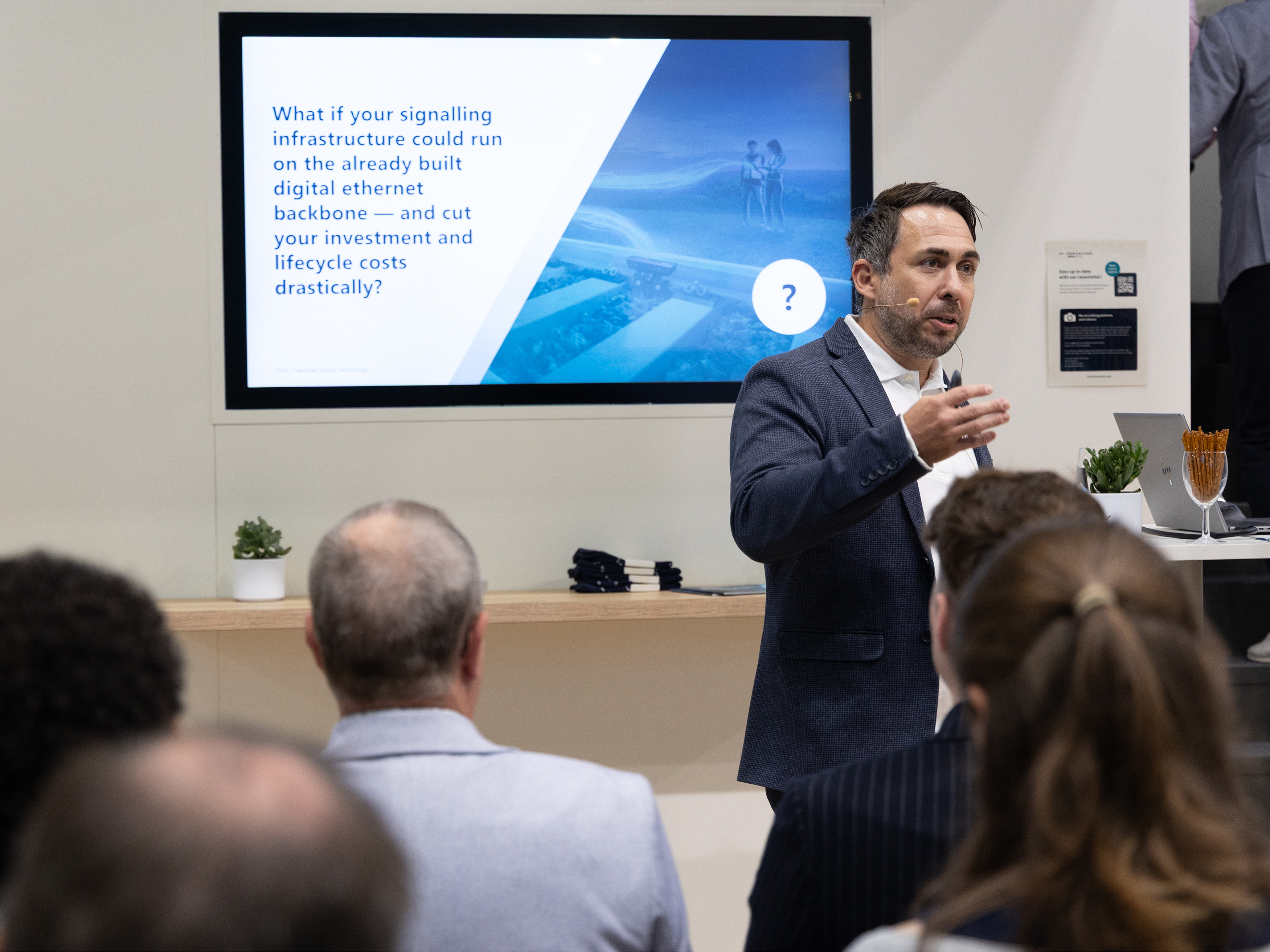
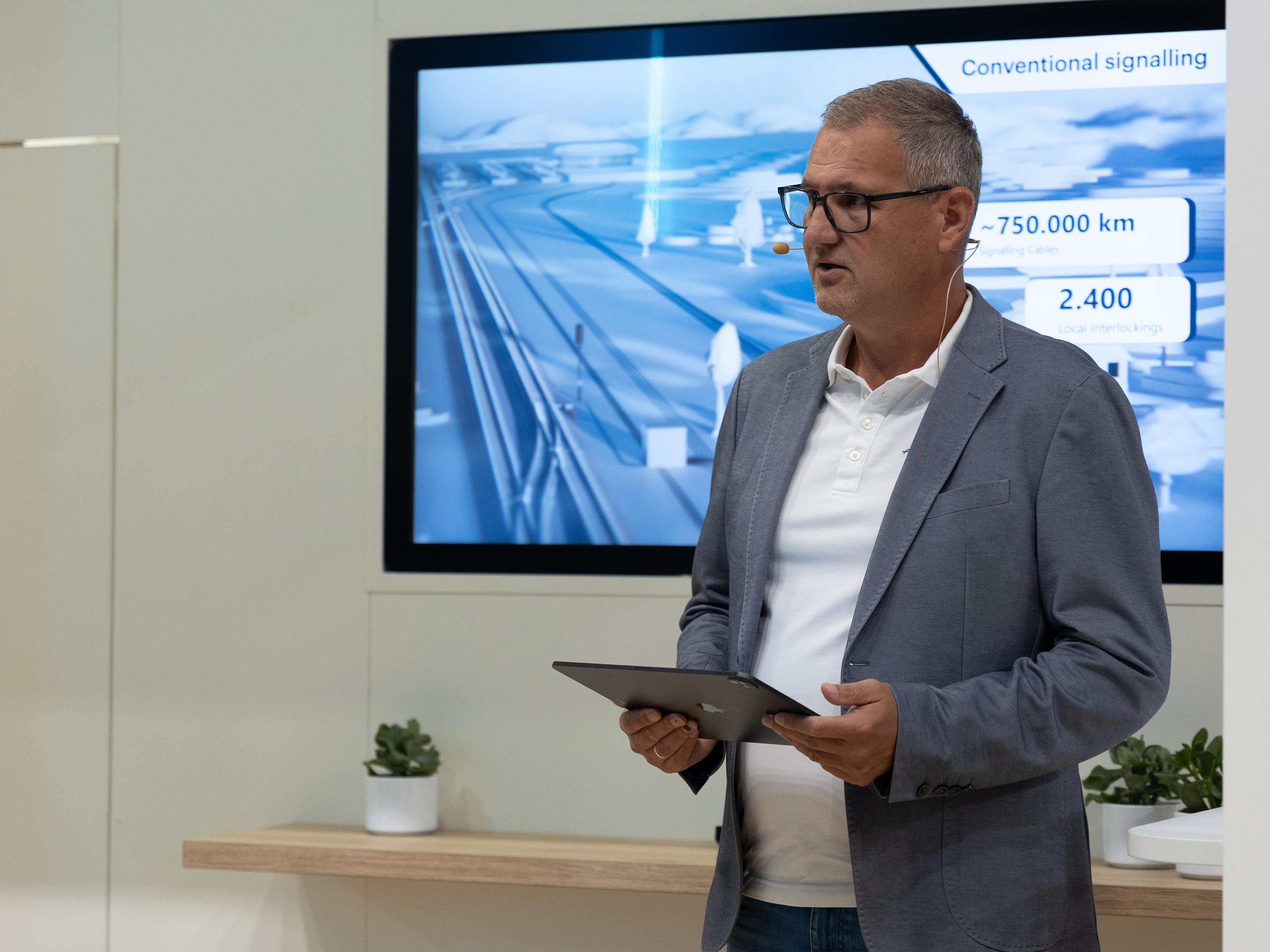
Four talks held directly at the stand each drew dense groups of listeners – and, more importantly, the discussion carried on afterwards in the product area, right at the exhibits and mostly along concrete project questions.
Central Control, Smart Field: Is the Boundary Still Right? (Florian Einböck) posed the fundamental question of the show: why do real-time safety functions remain tied to the interlocking core when the relevant data is generated somewhere else entirely? The talk showed how FAdP dissolves that hard-wired coupling and vendor dependence.
From standard to track: EULYNX object controllers in practice (Michael Zweimüller) turned the standard into a project story. Using Digirail as the example, he gave the honest version: what worked, what was challenging and what was learned along the way.
Rethinking Train Detection: The potential of digital communication (Manfred Sommergruber) set out what happens when signalling runs on the digital backbone that already exists – right down to the individual wheel sensor: drastically simplified cabling, richer diagnostic data closer to the track and new possibilities for condition monitoring.
Safety meets Security: A shared lifecycle responsibility (Christian Pucher) addressed the topic that hardly a single conversation leaves out these days. NIS2, the Cyber Resilience Act (CRA) and IEC 62443 define what secure signalling needs to look like. The real question is a different one: how do you keep that level alive for 30 or more years of service life – through every software update, every component swap, every newly discovered vulnerability? Safety and security follow different rules, but the same principle: it only works together, with clear roles for manufacturer, integrator and operator.
Florian Einböck, Head of Portfolio Strategy (click to download)
Michael Zweimüller, Systems Engineer (click to download)
Manfred Sommergruber, Global Product Manager (click to download)
Christian Pucher, CMO (click to download)
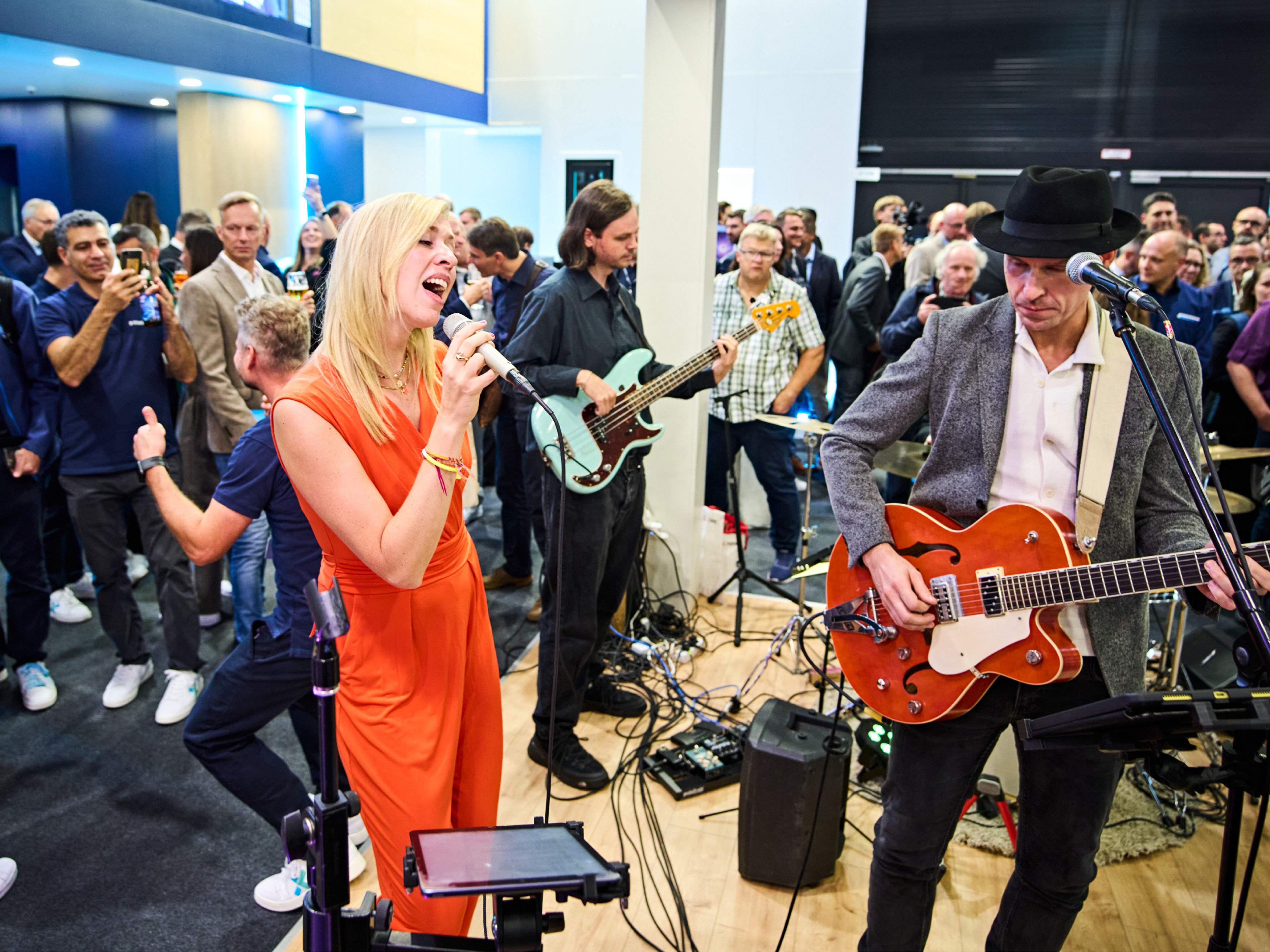
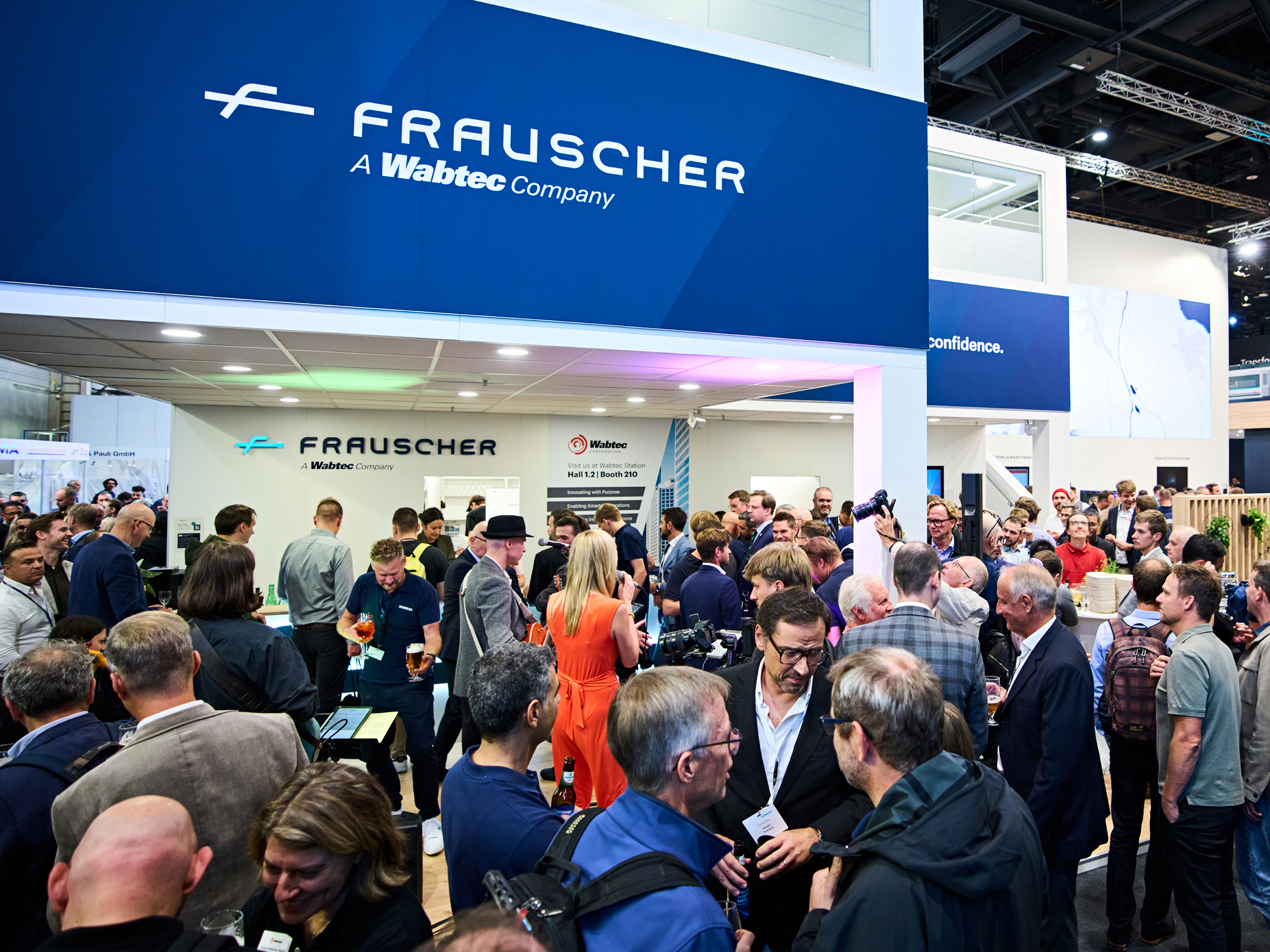
After the first of four show days, the stand filled up once more on Tuesday evening from 6 pm, in a rather different way. Visitors of many nationalities came together for the traditional Frauscher stand party: live music, a relaxed atmosphere, first impressions shared, acquaintances renewed and new contacts made.
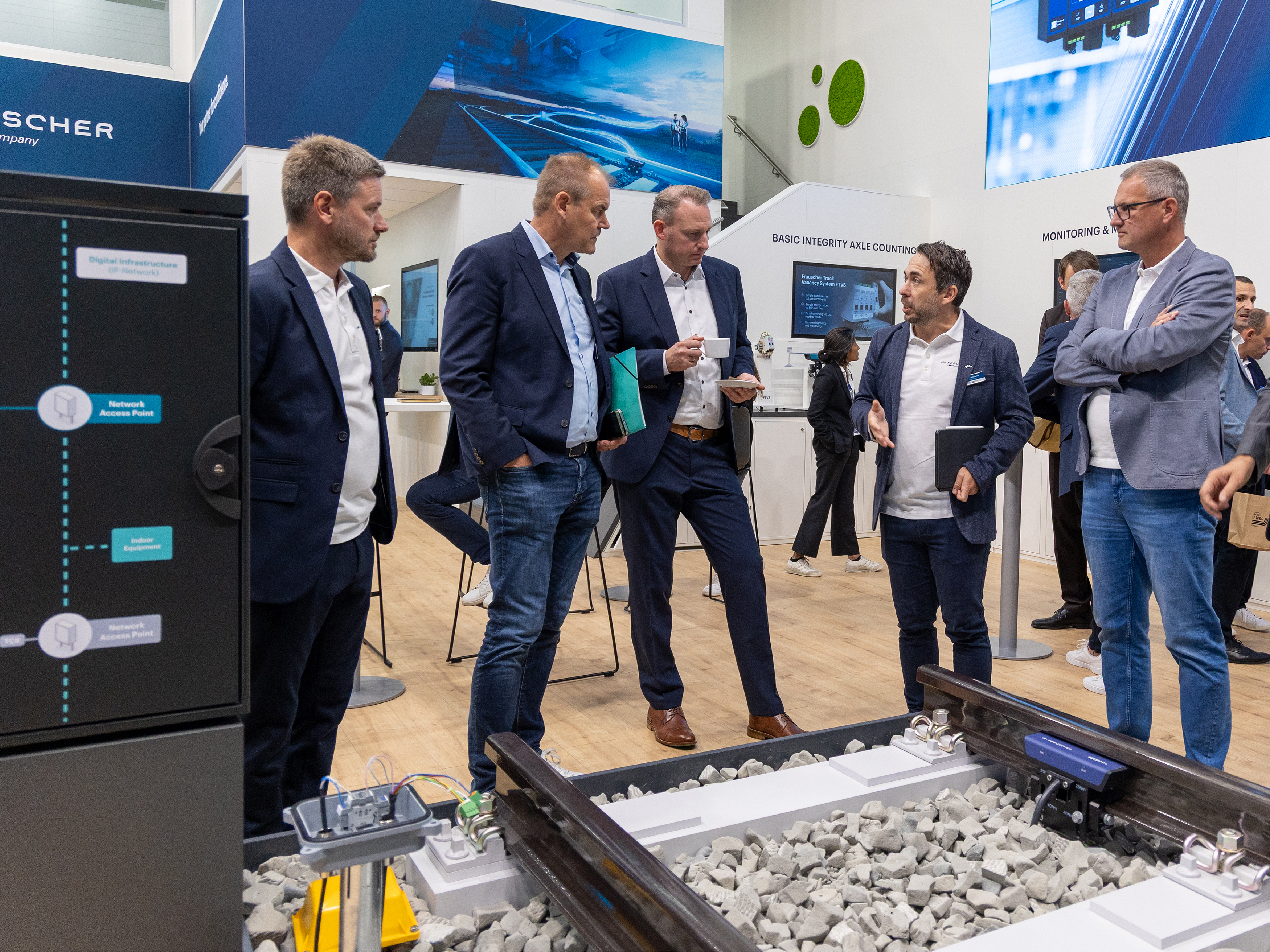
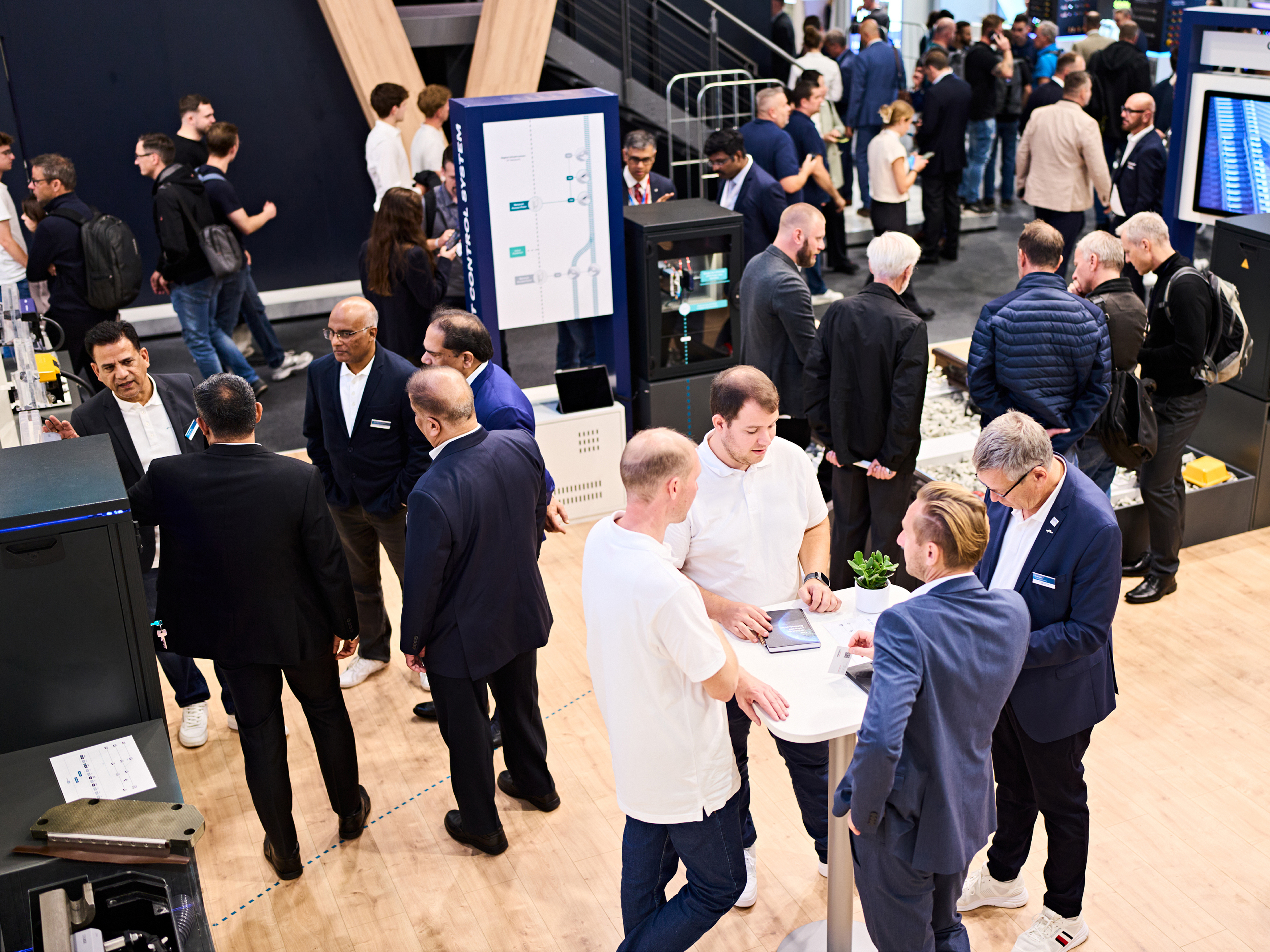
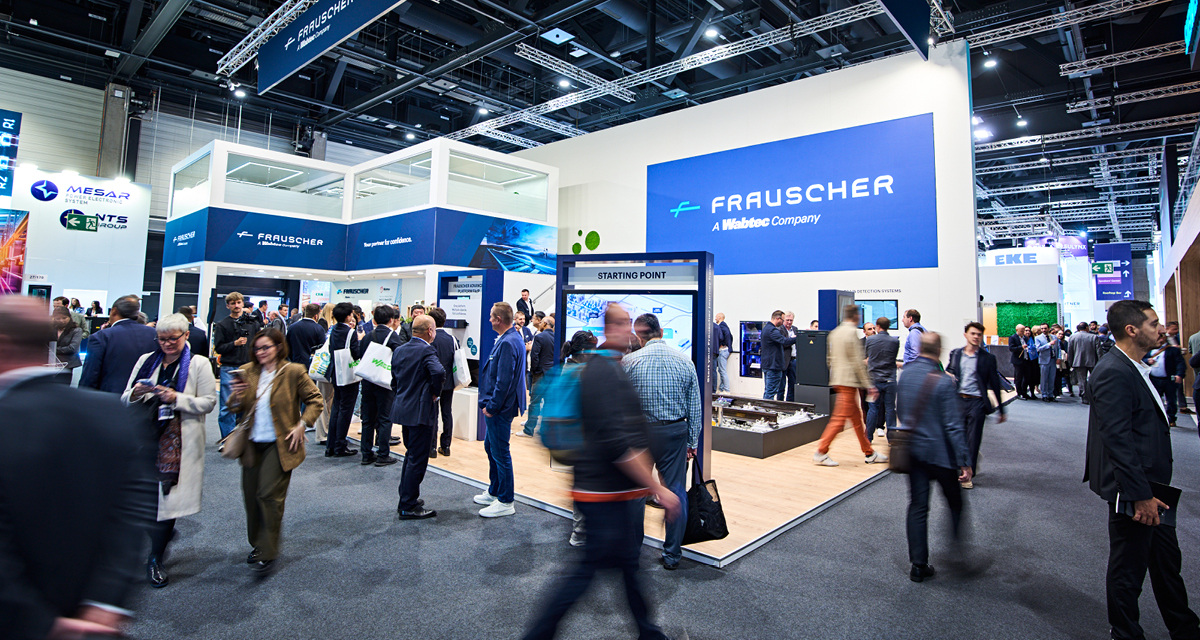
InnoTrans Booth impressions (click to download)
InnoTrans Booth impressions (click to download)
InnoTrans Booth impressions (click to download)
InnoTrans Booth impressions (click to download)
Frauscher stand party (click to download)
Frauscher stand party (click to download)
Digitalisation opens up possibilities for the rail industry that are accelerating with cloud technologies, growing connectivity and Artificial Intelligence (AI). The requirements arising from this are just as clear: modernisation projects need proper planning, new projects have to be rethought, and cybersecurity is becoming a discipline every player in the industry has to master.
The conversations in Hall 27 confirmed that current developments address precisely these points.
“FAdP changes how operators think about wayside object control – one foundation for point control, train detection and I/O,” says Mayank Tripathi, Vice President and General Manager at Frauscher Sensor Technology. “At the same time, the new RSR3xx generation takes wheel detection to a new level of reliability and ease of deployment. What I find most rewarding is that this is not ambition on paper – FAdP Point is already validated under real operating conditions today.”
To watch this video, you need to enable "Targeting Cookies".
Please update your cookie preferences.
Frauscher Sensor Technology provides field elements for train detection and wayside object controlling, complemented by software, connectivity, and data transmission solutions with comprehensive life cycle services. Our global network of locations and partners ensures reliable supply chain management and customer support, forming a trusted foundation for rail network operators. Frauscher is part of Wabtec Corporation, a global provider of equipment, systems, and digital solutions for freight and transit rail industries.

