

Notification Center

The Counting Head Control (CHC) feature enhances system availability by continuously monitoring the condition of counting heads (wheel sensors) and their designated track sections. CHC automatically detects and corrects external interferences that could affect track section occupancy data.
This feature ensures that wheel sensors are only activated when a wheel passes over them. In cases where a sensor is damped without an actual train being present in the track sections adjacent to it, the system keeps the track sections reported as clear. By placing the affected sensor in a standby mode, any false occupancy reports are effectively suppressed, ensuring consistent and reliable track status information. If the sensor is subsequently traversed by a wheel, the system immediately switches back to active and resumes reporting at a SIL4 safety level.
Suppression of external influences
SIL 4 compliant
Trackside maintenance without affecting clear/occupied status
Higher system availability
Prevention of unnecessary downtime
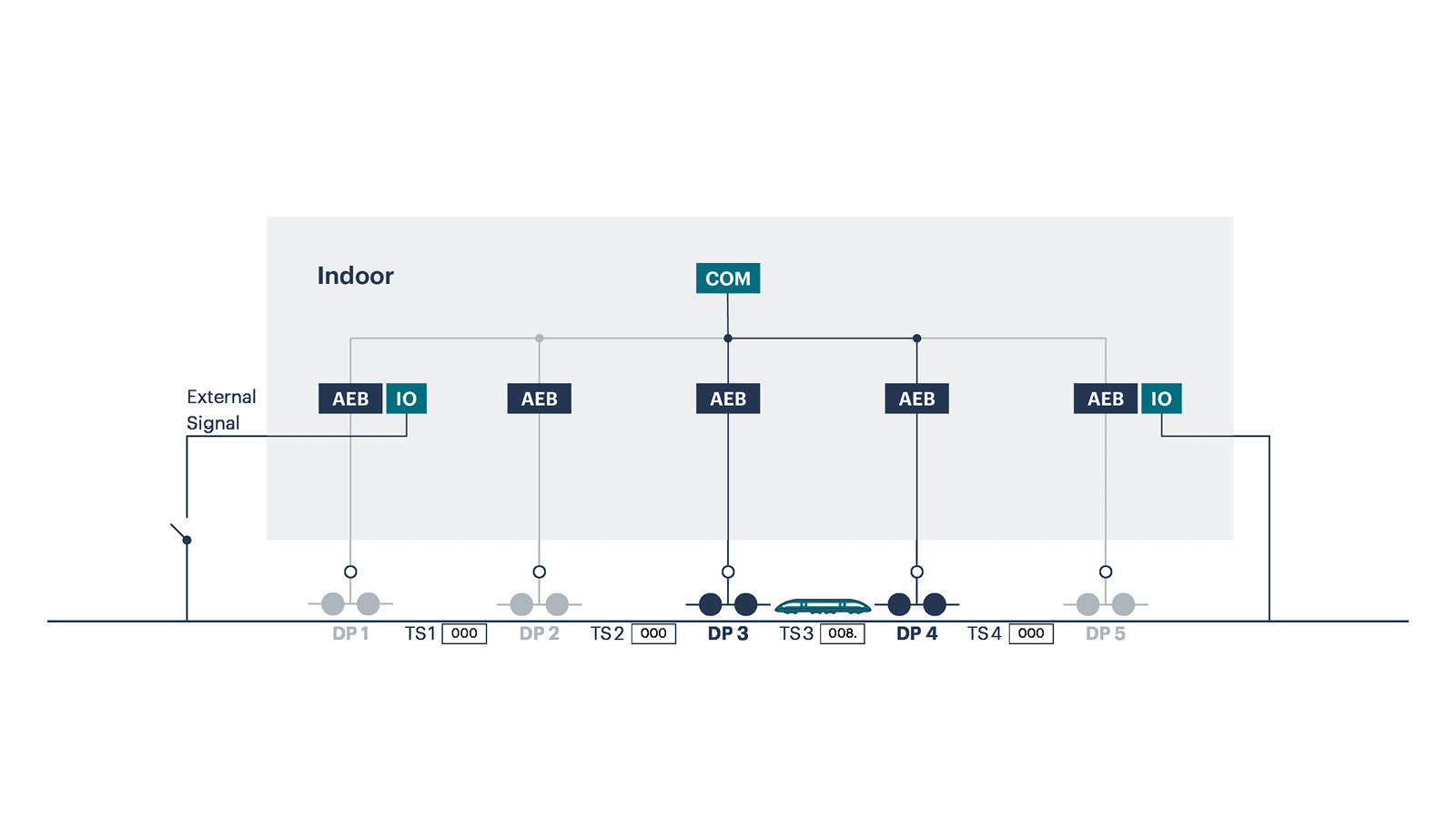
The CHC feature functions as an intelligent layer within the axle counting system. Once configured, it oversees connected track sections and ensures that the predefined control logic is applied consistently, so counting heads are activated only when traversed by a wheel.
The resulting occupancy or fault information is provided via the Advanced Evaluation Board AEB. When a counting head is damped but no actual wheel passage is detected, the CHC logic keeps the associated track section reported as clear. In case of external interferences, the CHC flags the affected sensors and initiates corrective actions to automatically restore normal operation without manual intervention.
To watch this video, you need to enable "Targeting Cookies".
Please update your cookie preferences.


Within the AEB, a configurable parameter defines the maximum number of occupancy indications that may be suppressed for each wheel sensor system within a defined time period. If this limit is exceeded, the associated track section is automatically reported as occupied to ensure fail-safe operation.
In the event of erroneous occupancy indications, CHC verifies the track section’s status against the configured logic. It ensures that no occupancy output is generated via the AEB when the section is clear, preventing unnecessary interruption to operations. As a result, temporary disturbances such as maintenance activities do not cause occupancy indications, directly supporting increased system availability.

Contact our team to learn more about FAdC features.
