
Notification Center

Florian Einböck
01 Oct 2026 | 6 min read
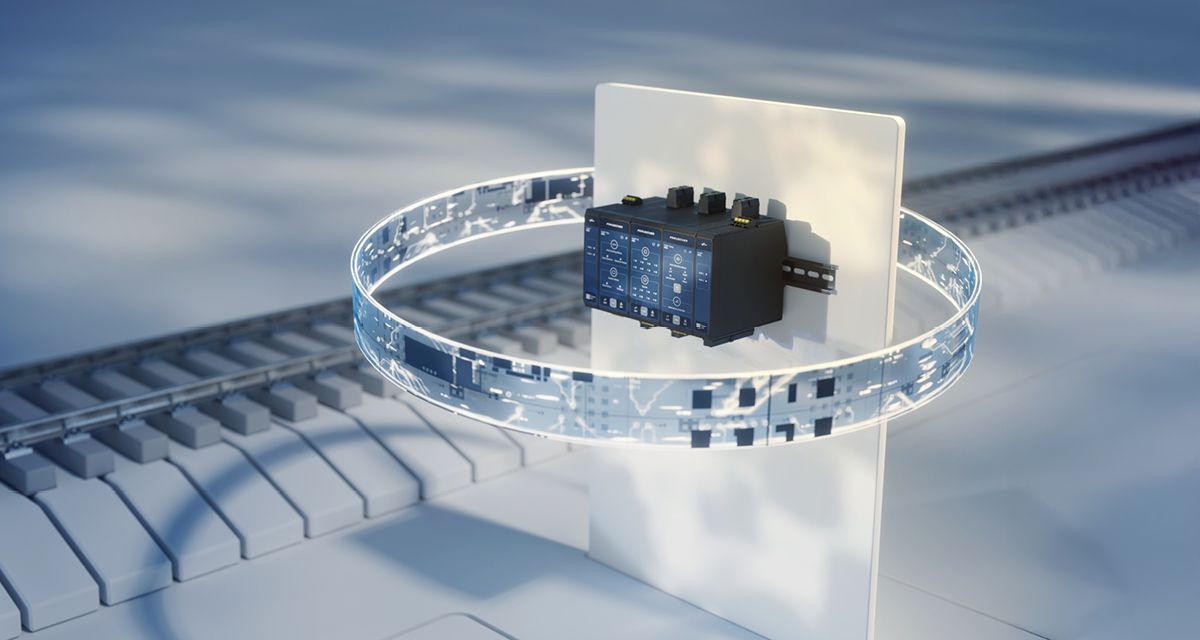
Modernising control command and signalling (CCS) architecture is not simply a matter of replacing outdated components – it is an opportunity to rethink the underlying architecture from the ground up. That opportunity arises because several pressures are converging on railway infrastructure worldwide at the same time: ageing generations of interlockings, rising capacity requirements, tightening budgets, and a fragmented supplier landscape of proprietary architectures. Together, they are pushing the industry into a demanding phase of modernisation.
Most current CCS modernisation projects point in the same direction: a supplier-independent architecture in which interlocking logic runs centrally while field elements are controlled through IP-based networks by decentralised Object Controllers. Standardisation is what makes this possible – it allows interlockings, Object Controllers and field elements from different manufacturers to interact reliably. EULYNX is a leading example: its current Baseline 4 defines standardised interfaces between interlockings and field elements, supporting the same shift towards centralising interlockings in data centres.
The potential is measurable. A 2024 study on Germany's "Digitale Schiene Deutschland" programme projects capacity increases of up to 15% through modern digital infrastructure. Standardisation also reduces lifecycle costs and helps operators avoid the vendor lock-in that proprietary systems have often created. The practical question is which architecture and implementation strategy can realise these advantages.
Object Controllers are the technological enabler that connects these two worlds. Frauscher Sensor Technology has been active in standardisation initiatives since 2002, building over two decades of experience in interface integration and safety-relevant software development – starting with the Frauscher Advanced Counter FAdC®, an axle counting system with relay and software interfaces for established interlocking platforms, and continuing as an EULYNX early adopter from 2019, gaining field experience with European railway operators.
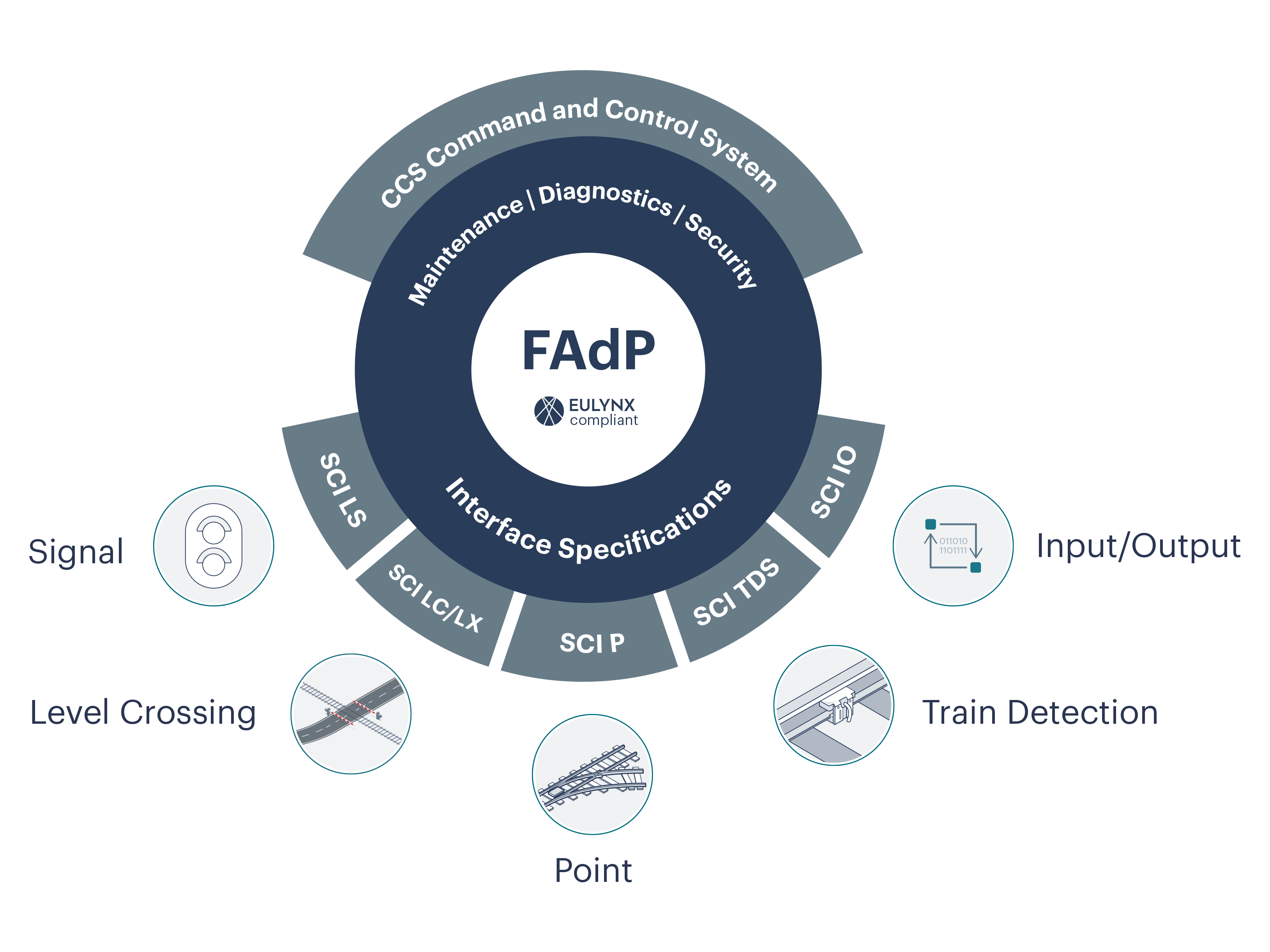
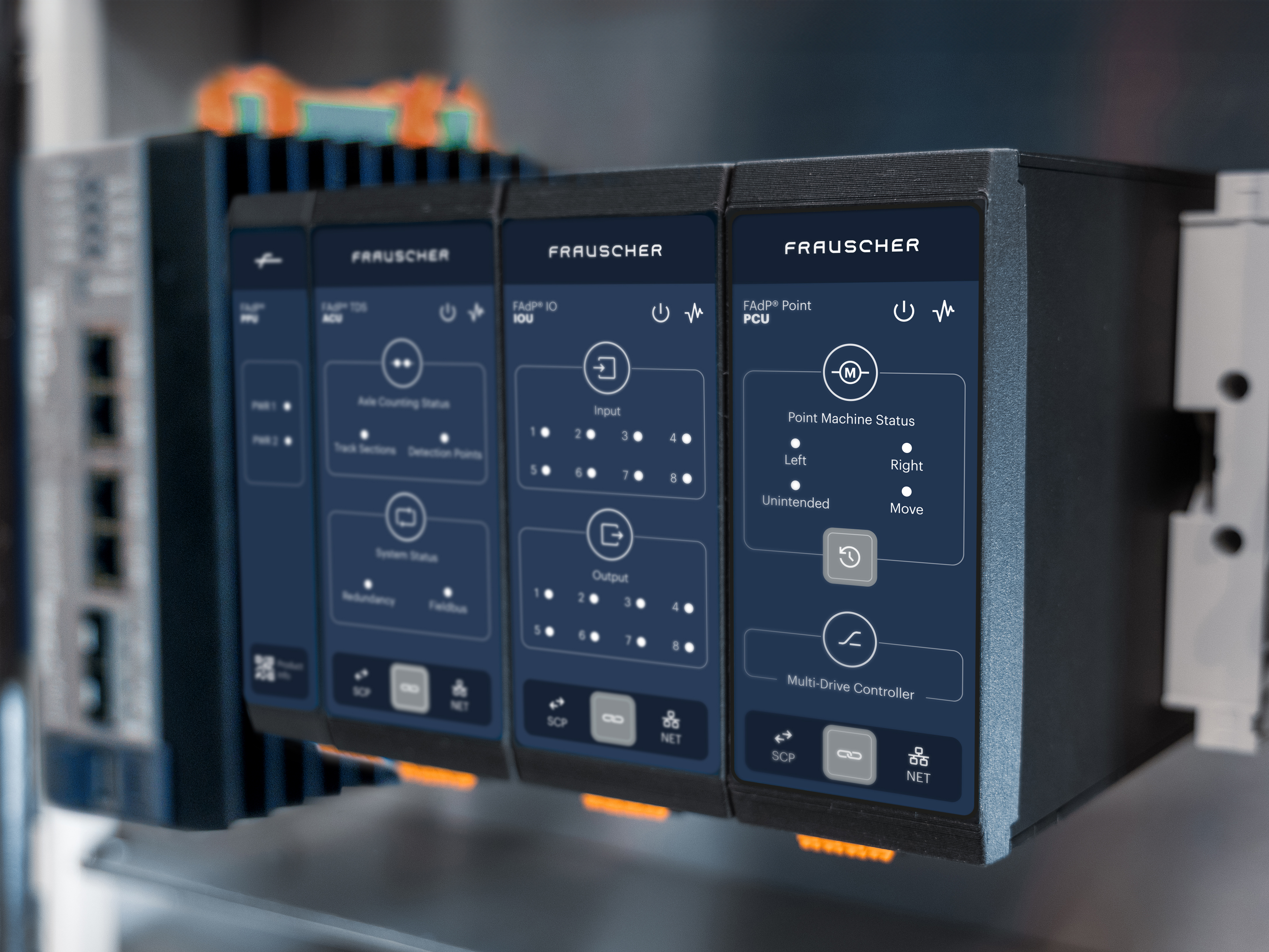
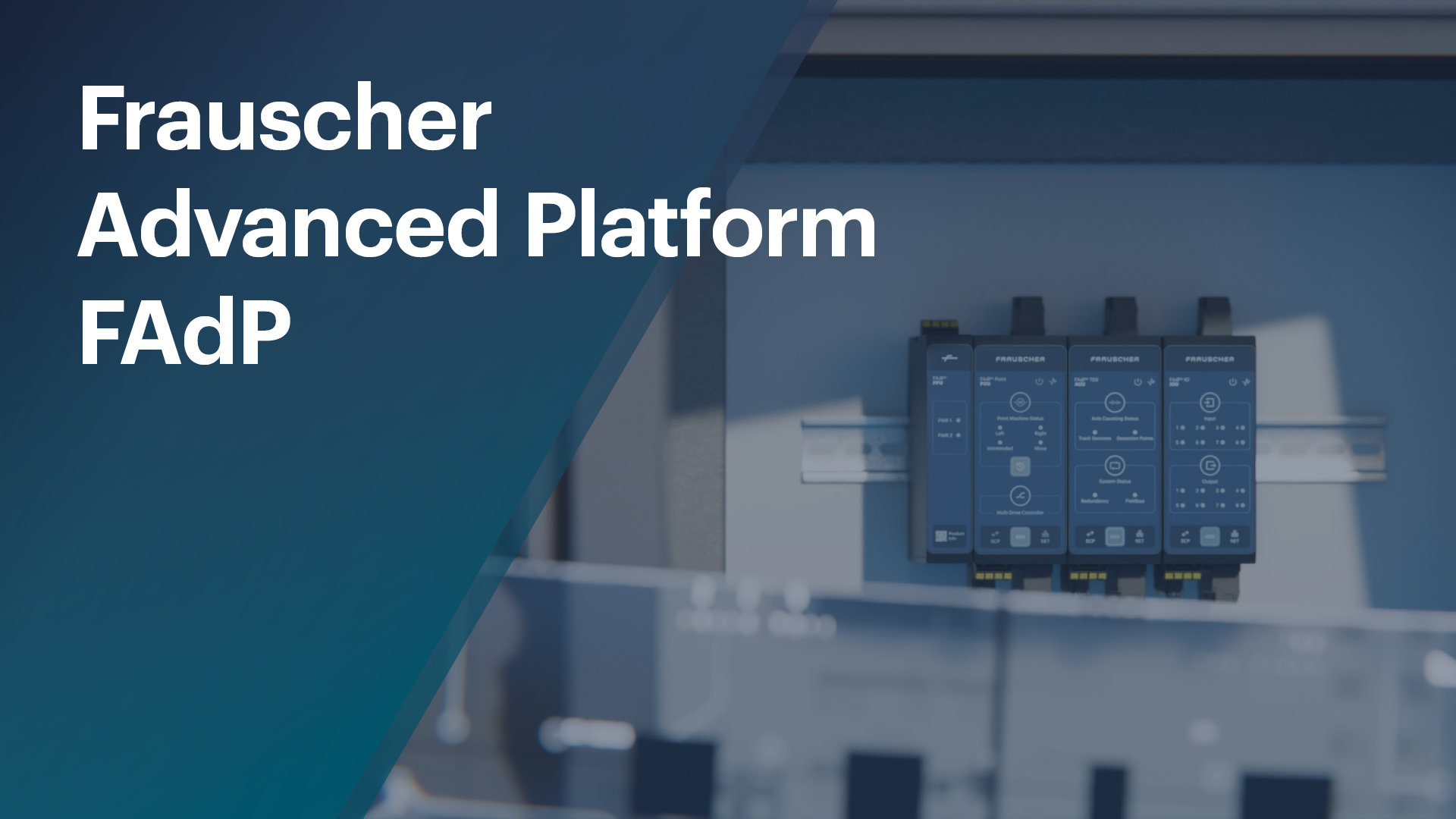
These insights are consolidated in the Frauscher Advanced Platform FAdP, now in its fourth generation. FAdP is not a single product but a shared foundation for multiple Object Controller types: FAdP Point for SIL 4-compliant point control, and FAdP IO for generic input and output functions across various field applications. A further Object Controller, FAdP TDS for train detection, is currently at concept stage as Frauscher explores market interest in extending the same platform logic to this application; the equivalent role is already fulfilled today by FAdC® combined with Frauscher Connect Devices.
Around 70% of the components across these different Object Controller types are identical, with roughly 30% application-specific. Multiple instances of the same field element can be consolidated under a single "Multi-Element Controller", while a "Multi-Type Controller" can manage several different object types – point, train detection and I/O – within one system. PDI stacking allows several Object Controllers to share a single RaSTA connection to the interlocking, reducing the number of physical and logical interfaces required at system level.
This platform logic translates into a set of concrete operator benefits:
Reduced lifecycle costs and simpler maintenance through cross-system software updates
A smaller physical and energy footprint
Easier integration of field elements from different manufacturers via standardised interfaces
A modular Connectivity Unit, implemented as the Frauscher Connect Device, separates safety-relevant Application Units – built for service lives of 30 years or more – from the security-relevant network communication that needs far more frequent updates in order to respond timely on new security scenarios, incidents or vulnerabilities. As this component is shared across FAdP Point, the future FAdP TDS and FAdP IO, security patches can be rolled out across the whole family without touching SIL 4-certified components.
Share this post

Head of Portfolio Strategy
While Europe leads on decentralised digital architectures, similar developments are under way elsewhere. India, for example, is adopting the Standard Indian Protocol SIP standard, based on an EULYNX 3.5 specification, as part of large-scale modernisation programmes, with discussions already under way on migrating further to EULYNX 4 or higher. The underlying principles – modular architecture, standardised interfaces, decoupled lifecycle timescales – prove transferable even where exact specifications differ.
This matters because operators rarely face identical starting conditions. The choice between complete system renewal and incremental migration depends on the condition of existing installations, available budgets, operational windows and strategic objectives. Greenfield projects can adopt a full EULYNX architecture from the outset, while brownfield modernisations typically follow a staged path: field elements are digitalised first, with the interlocking remaining in place until it can be replaced without any renewed intervention in the field infrastructure.
Decentralised architectures also change how operators procure and manage their systems. Object Controllers on a generic platform cannot be sourced on a one-stop-shop basis; the modular approach requires ongoing collaboration between operators and specialised manufacturers, particularly for the long-term security commitments that a 30-year service life demands. Emerging technologies reinforce this shift: artificial intelligence and machine learning enable predictive maintenance, digital twins create virtual representations of physical infrastructure, and cloud-based platforms aggregate diagnostic data across distributed installations.
A generic Object Controller platform will not, on its own, solve the capacity and cost pressures facing railway operators today. But it does provide a foundation flexible enough to grow with a project's ambitions, and standardised enough to keep the door open to different suppliers over decades of operation. Realising that potential is not a task for any one company – it depends on operators, integrators and manufacturers solving these architectural questions together.
To watch this video, you need to enable "Targeting Cookies".
Please update your cookie preferences.
Share this post
Get in touch with our team!
Interested in finding out more about the Frauscher Advanced Platform FAdP?
Share this post
Get in touch with our team!
Interested in finding out more about the Frauscher Advanced Platform FAdP?