

Notification Center

Frauscher Marketing
21 Oct 2026 | 5 min read
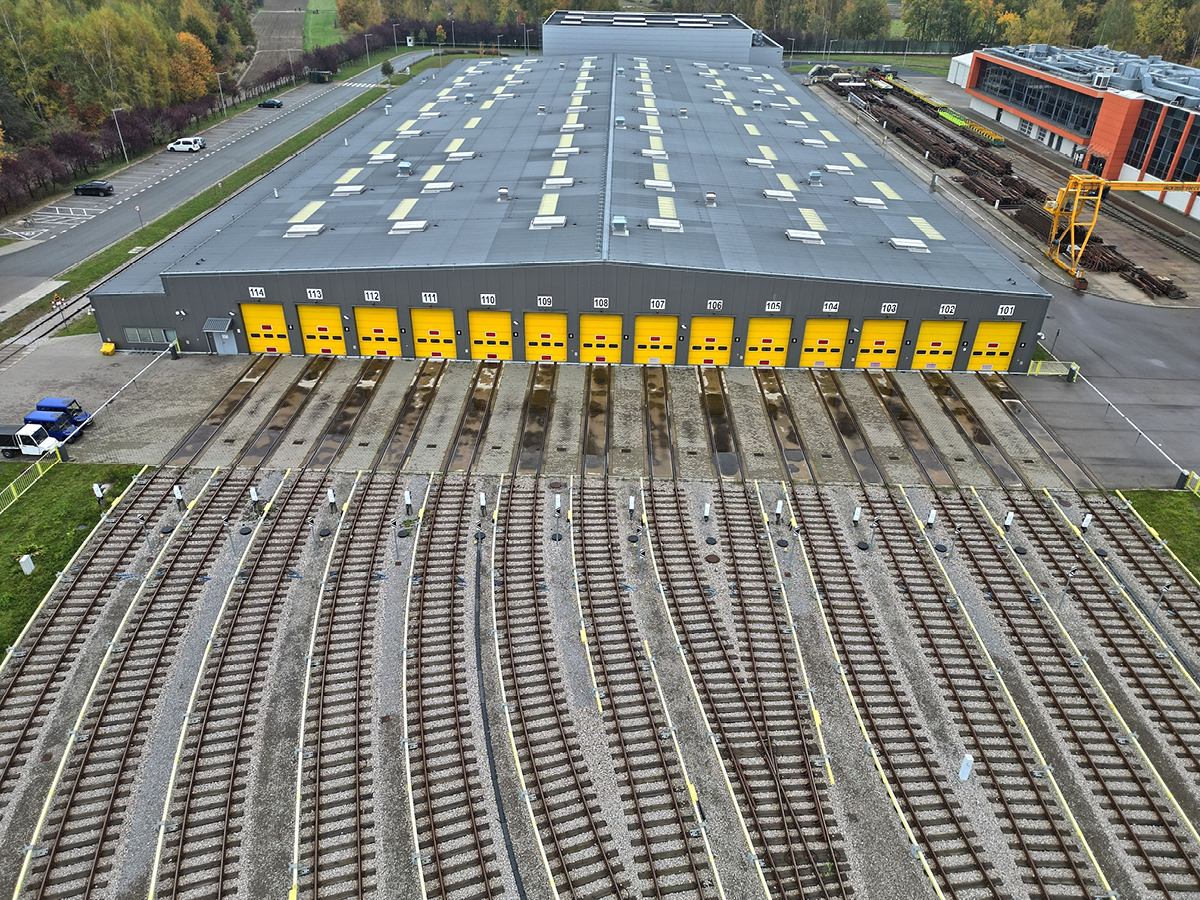
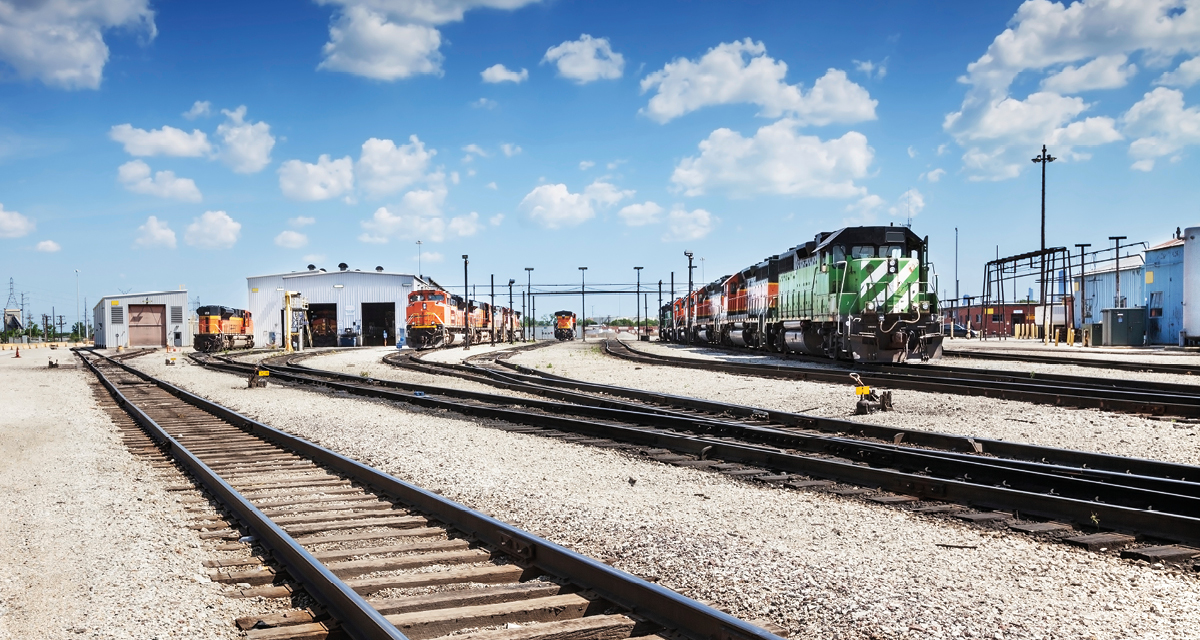
Yards, ports, mining sites and industrial facilities all depend on knowing exactly where a train or wagon is – yet these environments rarely justify the cost and complexity of a SIL 4 signalling system. Operators in this space face a recurring set of problems: track circuits that struggle with contamination and other challenging external influences as well as electromagnetic interference, SIL 4 solutions that bring certification overhead far beyond what many non-public sites require, and wayside enclosures where every centimetre of space is scarce. The Frauscher Track Vacancy System FTVS, in combination with the Frauscher Wheel Sensor RSR310, was developed to solve exactly this combination of challenges.
In many non-public environments – marshalling yards, ports, mining operations – train detection still matters for safety on a Basic Integrity level and efficiency, even though the applications themselves are non-vital. Protecting switch points, monitoring storage tracks, or triggering automated equipment all depend on knowing when a vehicle is present. But conventional approaches often fall short of what these sites actually need.
Track circuits are prone to false readings from oil contamination, moisture, corrosion and degraded ballast – conditions that are common in exactly these demanding settings. Fully SIL 4-certified axle counting, on the other hand, is built for public networks with passenger and freight traffic and carries a corresponding level of documentation, validation and lifecycle rigidity that is disproportionate for a non-vital application. At the same time, operators need components that fit into tight, trackside enclosures, install quickly without extensive track possession, and keep long-term maintenance to a minimum
Railway systems that don't intervene directly in safety-critical operations are still expected to meet a defined standard: Basic Integrity (SIL 0). A malfunction in these systems does not necessarily create a hazard requiring SIL 4 certification, but the systems must still comply with fundamental standards such as EN 50126, EN 50129 or EN 50716. Assessing which safety level applies to a given non-public site or application remains the responsibility of the operator.
FTVS is designed specifically for this category, closing the gap between track circuits and full SIL 4 axle counting: the reliability of inductive wheel detection, without the cost and certification complexity of a vital system.
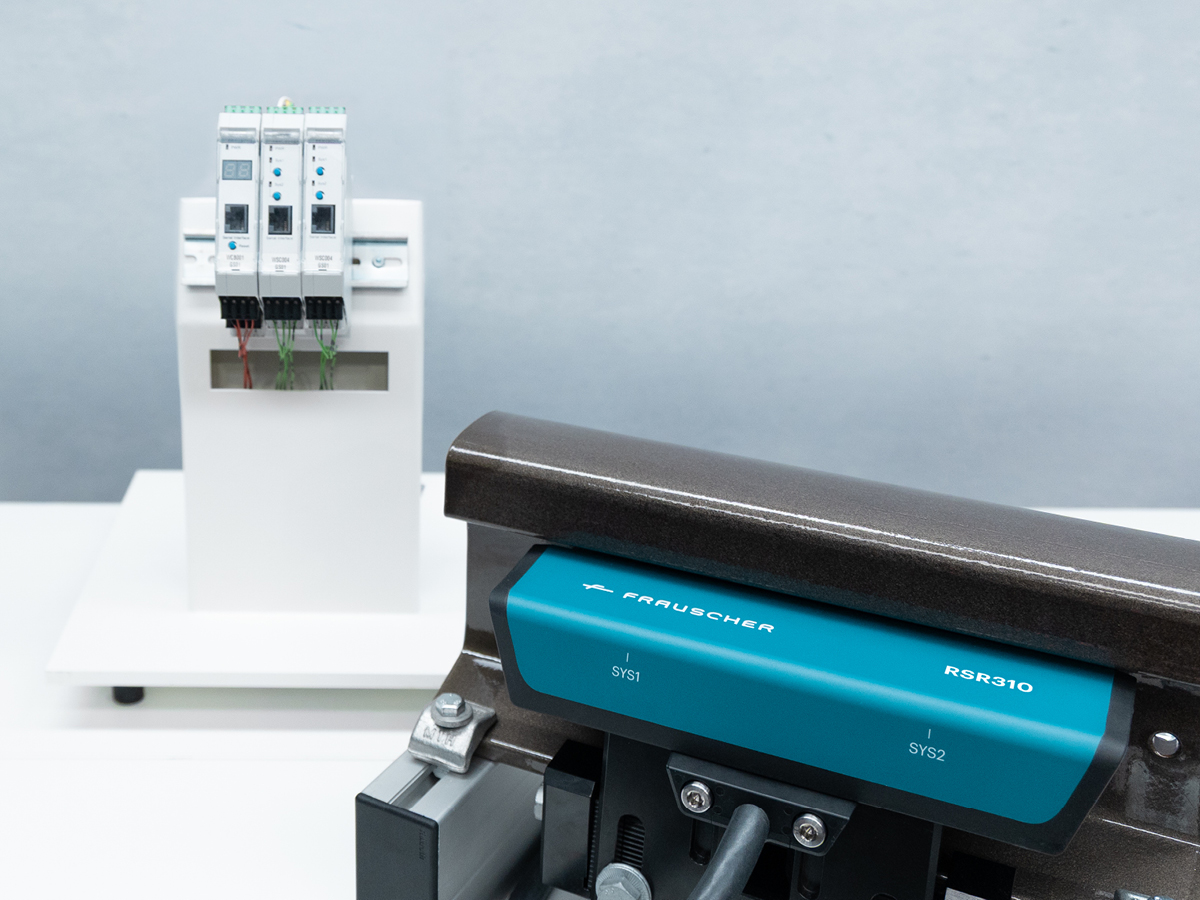
FTVS combines the RSR310 as the wayside component with two indoor components. The Wheel Sensor Signal Converter WSC converts the sensor's analogue signal into digital outputs. The Wheel Counting Board WCB then evaluates the occupation status of each track section and provides it as potential free contact outputs via optocouplers. These outputs are compatible with any higher-ranking control system, so no protocol-based interface is needed to integrate FTVS into existing yard or facility systems. All indoor components mount on a standard DIN rail, which can be hosted in a cabin close to the track, keeping the footprint in wayside enclosures to a minimum. Calibration is carried out via the indoor equipment rather than on the track itself, reducing time spent trackside
The RSR310 detects wheels inductively: an electromagnetic field along the rail registers the measurable change in inductance caused by a passing wheel – a principle that, unlike track circuits, is not compromised by contamination, moisture or ballast condition and does not need insulated rail joints. The wheel sensor is mounted directly on the rail using the patented Frauscher rail claw, without drilling, and withstands -40 °C to +85 °C at IP68 protection, with electromagnetic compatibility certified to EN 50121-4 and AREMA 11.5.2. Cable runs of up to 6.4 kilometres are supported, reducing infrastructure requirements for distributed installations.
FTVS is not a concept awaiting field validation. Originally developed for the demanding conditions of marshalling yards in the United States, the system has since proven itself across numerous installations there, and has since been deployed in yards, ports and industrial facilities in countries all over the globe, including Austria, Germany and the Netherlands.
Typical applications for FTVS and RSR310 include the protection of switch points, end-of-track warning systems, the provision of vacancy information for storage tracks, the establishment of precise fouling points, and further automation tasks. Because the WCB's potential free contact outputs work without a protocol-based interface, FTVS can also trigger third-party equipment directly – from warning signals to automated gates – wherever a simple, hardware-based connection is preferable to a more complex digital integration.
Operators running Basic Integrity train detection in yards, ports or industrial environments face a genuine trade-off: track circuits that struggle with the very conditions these sites present, and SIL 4 solutions that carry more certification overhead than the application requires. FTVS and RSR310 close this gap with a Basic Integrity axle counting solution that combines proven inductive sensing, a compact and space-saving design, and installation without drilling. Already proven in projects across several countries, the system gives operators a dependable way to keep non-vital train detection reliable, without adding complexity they don't need.
Share this post
Interested in FTVS or RSR310?
Have questions about which train detection solution fits your application?
Share this post
Interested in FTVS or RSR310?
Have questions about which train detection solution fits your application?