
Notification Center


Florian Einböck
05 Nov 2026 | 5 min read
Railway operators are under growing pressure to keep signalling networks reliable and available, especially as maintenance budgets tighten and specialist staff become harder to find. A new generation of decentralised Object Controllers (OC), combined with centralised maintenance and data management, offers a way forward – enabling much of the day-to-day upkeep of signalling technology to move off site. This article looks at how that shift works in practice, and what it means for operational efficiency.
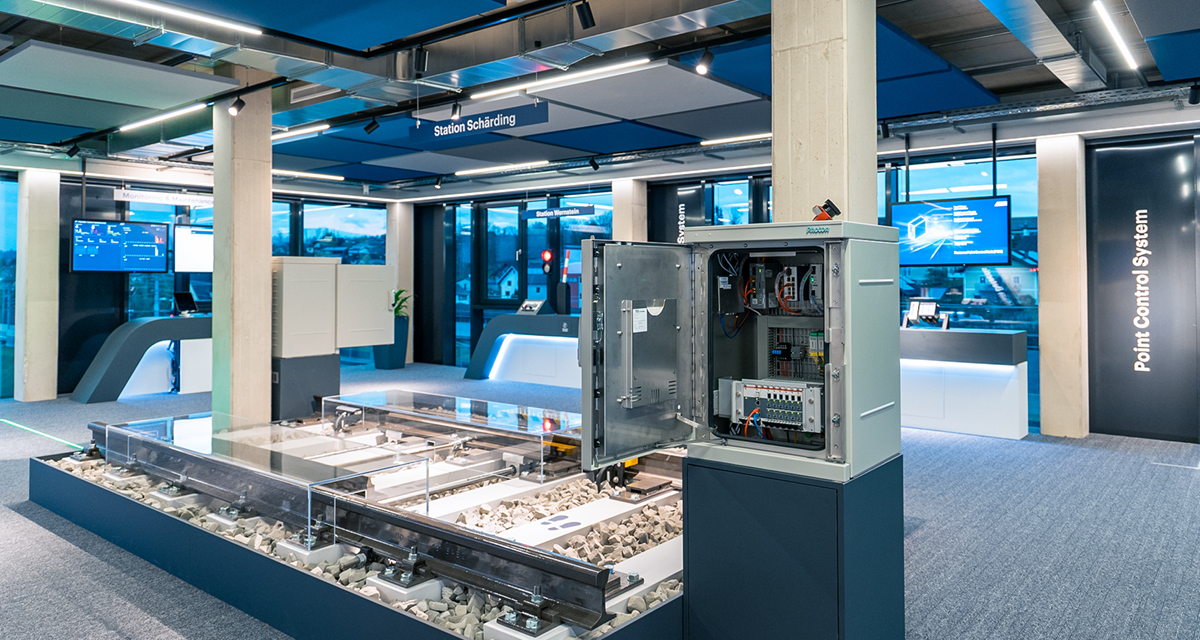
At the centre of this shift are Object Controllers with standardised interfaces, which act as the technological link between field elements – such as axle counters, points or light signals – and the interlocking system. They transmit interlocking commands to the field, return status information, and collect diagnostic and maintenance data.
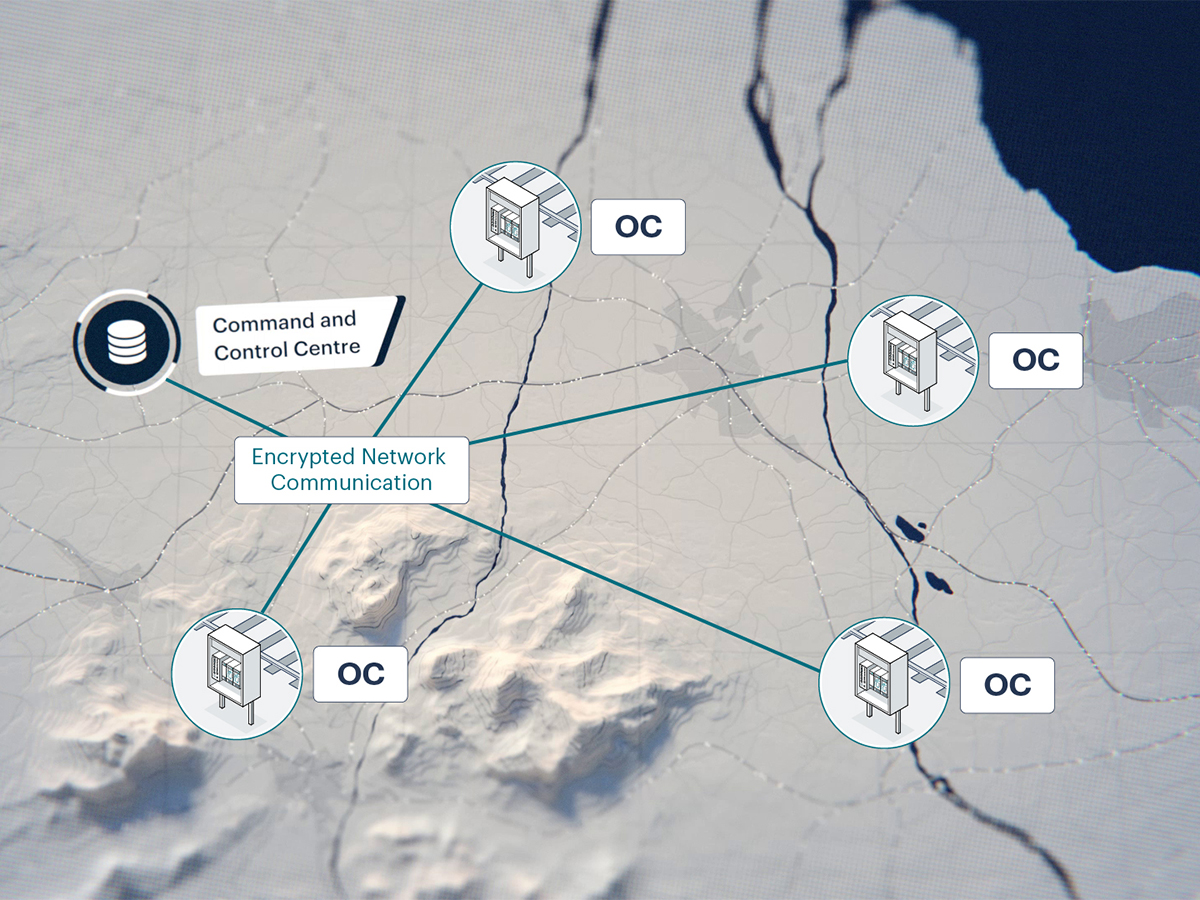
Legacy architectures typically require interlocking equipment to be installed locally, close to the field elements they control. This means extensive cabling, complex installation and labour-intensive maintenance, all of which push up operational costs. Centralised, digital interlocking architectures with decentralised Object Controllers in the field work differently: the interlocking logic moves to central or potentially even cloud-based data centres, while Object Controllers take over local responsibility for individual field elements along the line. New components can be integrated without additional cabling or major interlocking changes, simplifying both planning and implementation. From the perspective of an individual field element, this marks a genuine paradigm shift compared to control by local signal boxes – and it makes the overall system architecture more structured and less complex.
To watch this video, you need to enable "Targeting Cookies".
Please update your cookie preferences.
The new architecture also changes how signalling equipment is maintained. Modern Object Controllers offer far more configuration options than the fixed, single-application systems that were state of the art a decade ago. This flexibility allows components to be kept fully functional and up to date throughout their lifecycle – and it enables innovative update and maintenance strategies.
The basis for these strategies is reliable, secure connectivity. Resilient networks and continuous data connections serve train operation, diagnostics, status monitoring and remote maintenance alike. With this foundation in place, Object Controllers can be updated, diagnosed and serviced from central locations rather than on site. The focus of maintenance shifts accordingly: instead of local repairs carried out in response to a fault, the emphasis moves to preventive measures derived from the system’s own self-monitoring, and to targeted digital or physical problem-solving based on error messages. Maintenance becomes more predictable – and therefore more efficient.
A Maintenance and Data Management (MDM) server coordinates this work across widely distributed field elements. Its Diagnostic Collector aggregates diagnostic data from all connected subsystems, including EULYNX-compliant Object Controllers. This information, provided by the OCs, can be accessed by the MDM or higher-level diagnostic systems. A loading procedure manages the secure transfer of configuration data, software updates and patches. The system first ensures that every relevant Object Controller has received the correct file. It then triggers the update centrally at a defined point in time, typically scheduled to avoid interference with railway operations. Operators can follow progress and feedback in real time and confirm that all components have been updated successfully.
Reliable time synchronisation and secure logging keep every integrated component in a consistent, traceable state. This traceability supports the extensive validation and documentation that remain an integral part of returning a signalling system to operation after an update. Remote updates, configuration changes and tests therefore fit seamlessly into the sector’s established safety processes. On the Object Controller side, secure connectivity concepts such as Frauscher Connect add encryption, event logging and access protection to diagnostic and maintenance functions, ensuring that remote access strengthens rather than weakens system security.
For infrastructure managers, centralised updates, continuous diagnostics and preventive planning translate directly into operational value. Modern Object Controllers provide possibilities to detect, analyse and often resolve issues without a site visit. Thus, replacing components becomes a planned task rather than an emergency response.
This matters all the more in view of one of the sector’s most pressing challenges: the shortage of skilled labour, which is already apparent today and expected to intensify. Traditional maintenance models built around on-site interventions will struggle to keep pace as fewer specialists become available – and as the skills required shift towards software and network expertise. Central maintenance and data management servers help close this gap. They flag signs of wear or mechanical malfunction early and typically identify the affected device and the spare parts needed in advance. Skilled personnel can therefore be deployed precisely where and when they are needed.
Taken together, fewer outages, faster restarts, higher system availability and more efficient use of specialist staff have a direct impact on profitability. For infrastructure managers, investing in digital remote maintenance means investing in operational reliability at the same time.
Decentralised Object Controllers, combined with MDM servers and automated update capabilities, give infrastructure managers a practical path towards centralised, remote signalling maintenance – reducing on-site effort, minimising downtime and helping operators manage a shrinking pool of specialist skills more effectively. That path only holds up, though, when it is built on secure foundations from the outset: remote access to safety-critical infrastructure is only an advantage if it can’t compromise the availability and safety it’s meant to support.
Share this post
Ready to modernise your signalling infrastructure?
Let’s talk about how decentralised object controllers simplify operations and reduce maintenance effort.
Share this post
Ready to modernise your signalling infrastructure?
Let’s talk about how decentralised object controllers simplify operations and reduce maintenance effort.