Frauscher Sensor Technology has completed the divestiture to Wabtec Corporation.

Find Out More
Dillinger Hütte | Germany
Train DetectionGermany

Dillinger Hütte

Operator
AG der Dillinger Hüttenwerke
Country
Germany
Partner
Hanning & Kahl GmbH
Segment
Industrial & Mining
Application
Track Vacancy Detection
Products
RSR180, FAdCi
Year
2012
Scope of project
34 counting heads

A new ladder track was required to provide more parking tracks in the steel plant. At the same time, the layout of the dead end tracks were optimised and the efficiency of the whole depot improved by installing the Frauscher Advanced Counter FAdCi® in combination with the wheel sensor RSR180. With the implementation of the Frauscher Diagnostic System FDS, the overall maintenance costs can be significantly reduced.

Hanning & Kahl implemented 16 power operated, locally controlled points (EOW). A SIL3 proven control ensures safe, flexible and efficient operation. The Frauscher Axle Counter FAdCi® in combination with the wheel sensor RSR180 guarantees reliable train detection, while Frauscher Diagnostic System FDS provides diagnostic data to the higher level control system.

Thanks to the FDS which allows collection of data all over the system, the maintenance staff is now provided with diagnostic tools and a virtual track representation of the entire depot area. Irregularities and failures can be detected in advance before coming to expensive breakdowns. With the condition-based maintenance replacing scheduled maintenance, the overall cost can be significantly reduced.

Functional modularity

The FAdC provides reset options, counting head information, counting head control functionality and comprehensive diagnostic facilities.

Optimise maintenance

Analysis of diagnostic data provided by FDS allows condition-based maintenance and preventive measures.

Similar Projects
This might also interest you
1/5
Train DetectionUnited States of America

Class 1 Yard Project

Frauscher was approached by a North American Class 1 railroad planning a major expansion of one of its yards, and the required time to completion was short. The scope of the expansion was to build an operational multitrack flat yard on vacant land within six weeks with a signalling solution to protect switches during operations.
Train DetectionUnited Kingdom of Great Britain and Northern Ireland

London to Corby

The project was part of Network Rail’s Midland Main line electrification programme and involved re-signalling between Bedford and Kettering. The goal is the reduction of industry costs and environmental benefits through lighter rolling stock, reduced fuel costs and lower carbon emissions.
Train DetectionChina

CBTC Fallback System on Beijing Metro Lines

Beijing metro, one of the busiest lines in the world, was Frauscher’s very first assignment when entering the Chinese market. Due to its utilised capacity, it requires a great level of stability, reliability and performance of the entire signalling system. The Communication Based Train Control System (CBTC) applied here relies on a backup system consisting of fixed automatic train detection systems. Axle counting systems from Frauscher are perfectly suited for the accurate operation of such stand-by systems.
Train DetectionIndia

Ensuring reliable rail operations across India´s longest railroad bridge
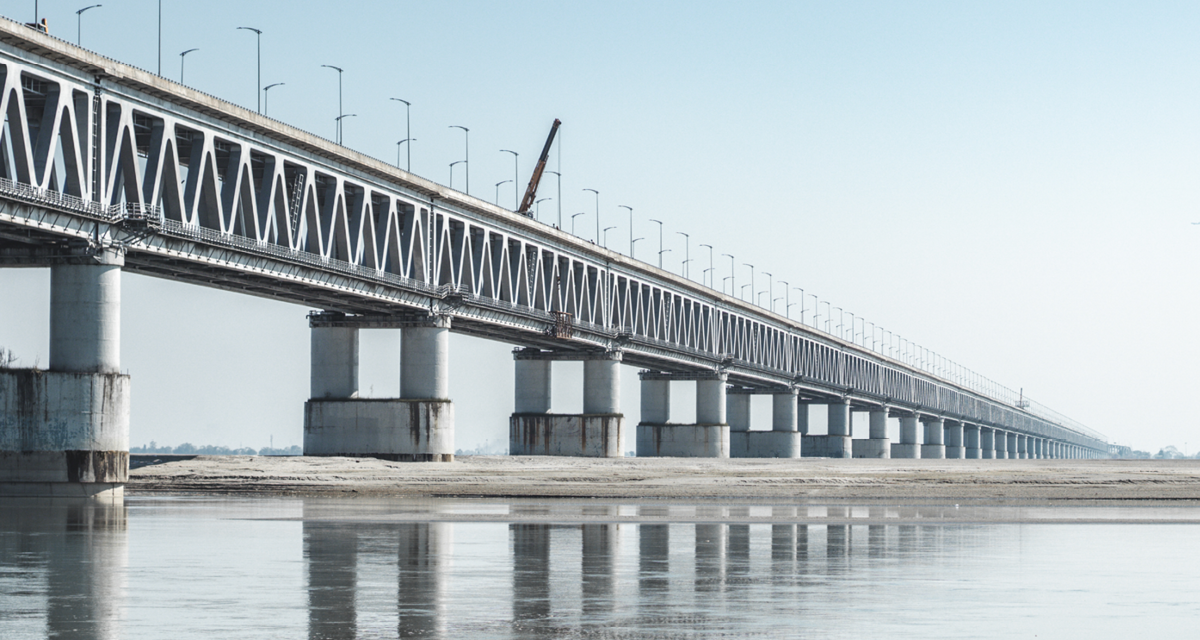
The Bogibeel Bridge is India’s longest railroad bridge that connects Assam and Arunachal Pradesh, carrying both rail and road traffic across the Brahmaputra River. Harsh environmental conditions and structural constraints made conventional signaling impractical. The Frauscher Advanced Counter FAdC axle counting system was selected for its proven reliability and low maintenance requirements, even in challenging conditions.
Train DetectionSpain

Three-rail Castellbisbal

The dual-gauge system of the Spanish railway network is quite challenging in terms of track vacancy detection: Wheel sensors must be installed on two rails next to each other in tight spaces and have to detect axles reliably on the respective rail. Frauscher developed a solution which copes also with the complexity of different interlocking technology in the stations along the line.