

Notification Center

Frauscher Marketing
16 Dec 2025 | 6 min read
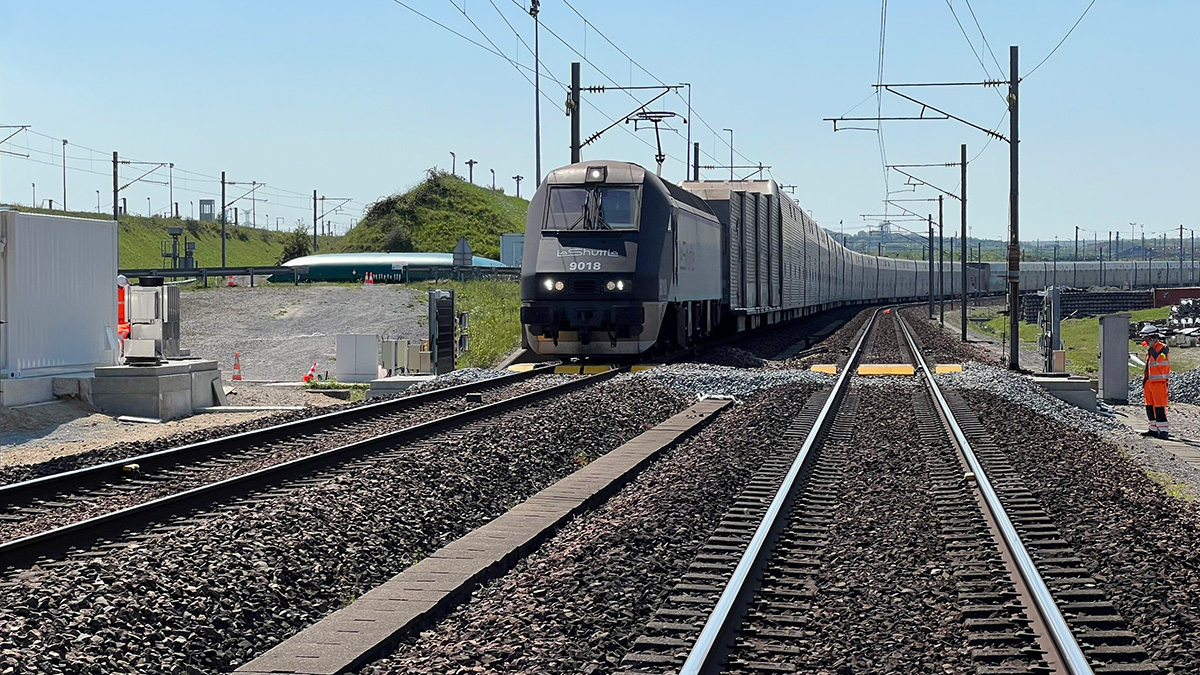
The Eurotunnel shunting yard forms part of one of Europe’s busiest rail corridors, with over 200 trains passing through each day at speeds of up to 100 km/h. In such a high-pressure environment, even the smallest operational disruption can have far-reaching effects, impacting both passenger and freight services. Within this context, MERMEC, a leader in railway diagnostics, was commissioned to install a high-speed, laser-based wheel profile measurement system capable of inspecting wheel profiles on passing trains. The challenge was not only in achieving the required precision but in doing so under strict safety conditions. The limited space between parallel tracks meant that traditional protective barriers could not be installed to prevent unintended laser exposure. This required a solution that would activate the laser only when a train was correctly positioned in the measurement section and deactivate it immediately if an adjacent track was occupied, all without disrupting the steady flow of traffic or compromising safety.
To meet these demands, MERMEC partnered with Frauscher to implement a suitable solution. At the core of this setup was the Frauscher Advanced Counter FAdC®, a SIL 4-certified axle counter that could be configured to monitor two adjacent tracks at once and send precise activation commands to the laser system. Furthermore, the FAdC® is renowned for its high degree of reliability, modularity and open interface, making it an ideal fit for this project.
Working to MERMEC’s specifications, Frauscher developed a custom relay interface that enabled direct communication with the measurement system’s control unit. This allowed for real-time enabling of laser emissions based on live axle detection, while automatically preventing activation when trains were present on neighbouring lines. The interface logic was fine-tuned to ensure uninterrupted operation in the yard’s demanding environment, with parameters such as relay timeouts, current thresholds, and switching logic carefully optimised for reliability, precision, and long-term durability.
An important aspect of the design was its fail-safe mode. In the event of a power loss or fault, the relays default to an open state, keeping the laser inactive. Restarting the system after such an event requires a manual reset, a safeguard that prevents unintended activation and ensures that operational control is never compromised. This attention to safety-critical detail has been central to the system’s acceptance and successful deployment in such a challenging setting.
Share this post
MERMEC
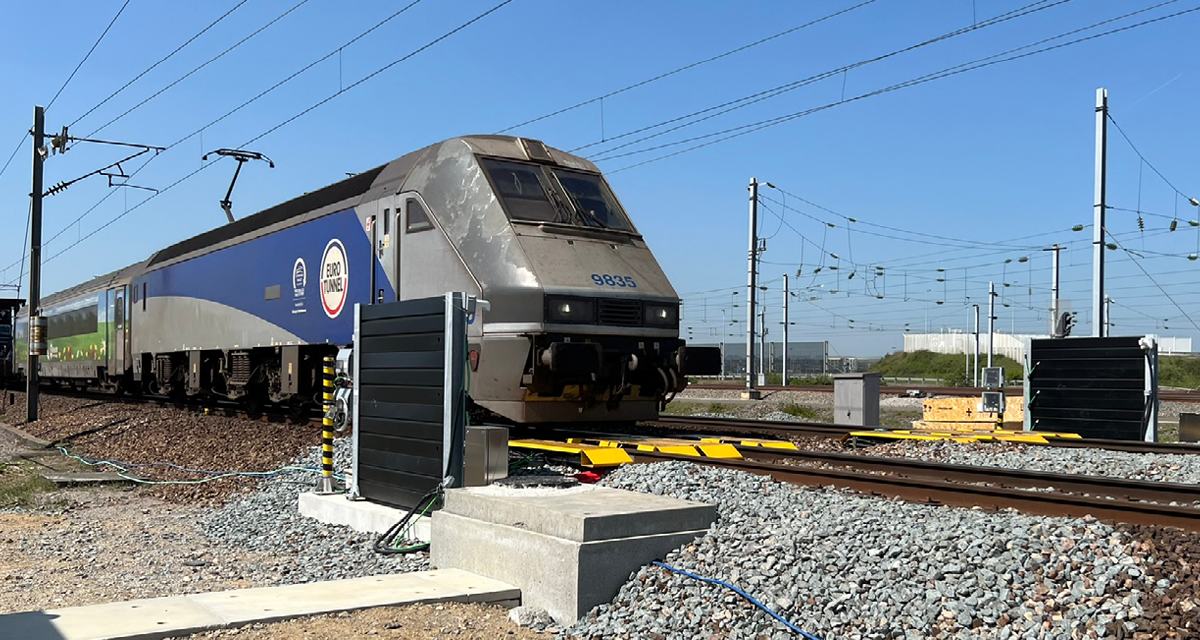
The result of this collaboration is a fully integrated, pre-configured solution that was delivered, installed, and commissioned with minimal on-site setup. The system includes Frauscher’s robust Wheel Sensor RSR123 and interface boards housed in a ready-to-use cubicle. Since commissioning, the Eurotunnel shunting yard has been able to perform continuous, automated wheel diagnostics without incident, maintaining the highest safety standards even under intense traffic conditions. The operator has achieved a seamless blend of safety and efficiency: wheel measurements are now taken automatically and accurately, without requiring manual intervention during normal operation, and with zero safety-related stoppages reported since the system went live.
This project demonstrates how MERMEC’s leadership in diagnostic technology, supported by Frauscher’s proven axle counting expertise, can deliver targeted solutions to unique infrastructure challenges. By integrating high-speed measurement capabilities with intelligent, fail-safe train detection, the Eurotunnel operator benefits from reliable, real-time data on wheel conditions. This not only helps to prevent costly maintenance issues before they escalate but also ensures that trains continue to run safely and punctually through one of Europe’s most strategically important rail links, contributing to the long-term sustainability and operational resilience of the network.
Share this post
Share this post