Frauscher Sensor Technology has completed the divestiture to Wabtec Corporation.

Find Out More
FAdC® at Vhodnaya Station | Kazakhstan
Train DetectionKazakhstan

FAdC® at Vhodnaya Station

Operator
ArcelorMittal Temirtau
Country
Kazakhstan
Partner
Kazcenterelectroprovod (KCEP)
Segment
Industrial & Mining
Application
Track Vacancy Detection
Products
FAdC®, RSR180
Year
2017

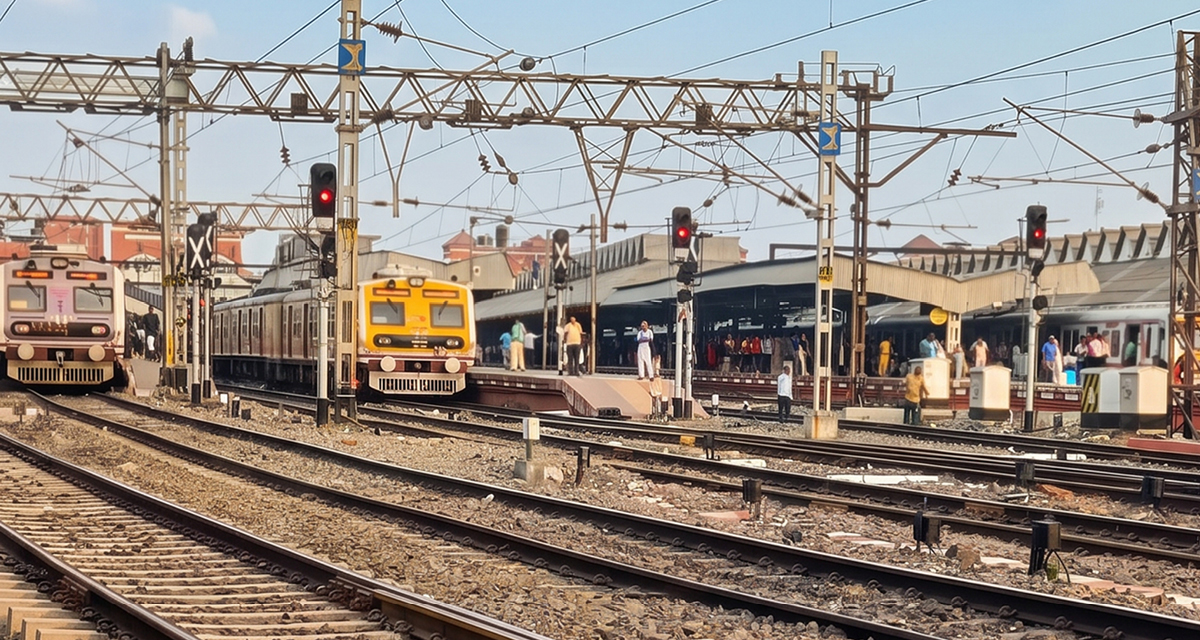
ArcelorMittal is responsible for the operation of a dedicated industrial railway infrastructure located in Temirtau, Kazakhstan. At Vhodnaya station, an essential shunting yard, various goods and materials, such as polyester, zinc, aluminium, sinter, iron ore, and coke-chemical products, are loaded and unloaded. The station's robust infrastructure features 64 switching points and 68 signals, necessitating the use of a high-performing train detection system to ensure the safe and efficient management of traffic flow.

The Vhodnaya station is a shunting yard that deals with various goods and materials, but the existing track circuit-based system for traffic management was not reliable enough due to extreme weather conditions and industrial dust contamination. To maintain uptime under such circumstances, the operator opted for a modern axle counter system, the Frauscher Advanced Counter FAdC®. The new system includes 120 Frauscher Wheel Sensors RSR180 that proved to be reliable and cost-effective. By installing the new system, lifecycle and maintenance costs were significantly reduced, downtime due to train detection failures was reduced, and operational efficiency increased.

Lower maintenance costs

By installing the axle counter, lifecycle and maintenance costs have been reduced dramatically.

Greater efficiency

Efficiency in terms of traffic management and the use of freight cars has increased.

Increase in system availability

Increase in uptime due to no train detection failures, leading to greater availability.

Similar Projects
This might also interest you
1/5
Train DetectionKazakhstan

FAdC® at Uglerudnaya Station

AcelorMittal is the operator of the Uglerudnaya industrial railway station, located in Temirtau, Kazakhstan. The station features a total of 56 switches and 52 track sections to enable the smooth flow of train traffic. To ensure the safety of all trains, an interlocking system is used to establish secure routes for incoming, outgoing, and passing trains. This requires effective traffic management and a dependable train detection system to detect the presence of trains on the tracks.
Train DetectionIndia

Vijayawada – Gannavaram Rail Line

The Vijayawada – Gannavaram rail line belongs to South Central Railway and is situated in Andhra Pradesh. Initially, the line featured a conventional signalling system and there was a requirement by the operator to update this into an automatic signalling system with the Frauscher Advanced Counter FAdC®.
Train DetectionCanada

Toronto Transit Commission

The Toronto Transit Commission (TTC) Line 1 Yonge-University is Toronto’s longest subway line, with track circuits utilized for signalling. Due to an increasing number of daily passengers and an aged system the need for upgrading without interfering with the daily operations became readily apparent. It was further required that the new signalling system functions independently of the existing system. It would provide CBTC fallback functionalities, and work as an overlay to the current track circuit-based system.
Train DetectionIndia

Jhansi - Bina Railway Line

The Jhansi-Bina railway line is a strategically important line which belongs to North Central Railway and is in Uttar Pradesh. Initially, the line featured analogue axle counters for detecting trains in individual track sections as well as a DC track circuit train detection system in less congested areas.
Train DetectionFinland

Kokkola

Frauscher supplied one of Finland’s busiest railway lines with new Axle Counters. The line was extended from a single to a double track section and Mipro was looking for a solution which can interface with their interlocking system in an efficient and cost effective way.